As an Amazon Associate, we earn from qualifying purchases. Some links on this site are affiliate links at no extra cost to you. Our recommendations are based on thorough research and editorial judgment.


How Do You Choose Basketball Shoes For Indoor Vs Outdoor Courts?

Choosing basketball shoes for indoor and outdoor courts requires careful consideration of several factors. Indoor shoes focus on traction and grip, utilizing softer rubber outsoles designed for polished hardwood surfaces, while outdoor shoes emphasize durability, featuring thicker rubber for resilience on rough concrete. Cushioning technology differs, with EVA foam preferred indoors for impact absorption, whereas polyurethane is ideal outside. Additionally, upper materials should be lightweight for indoor play and robust for outdoor wear. Each aspect plays a critical role in enhancing performance and injury prevention, leading to further insights into effective selection techniques.
Key Takeaways
- Choose indoor shoes with softer gum rubber outsoles for enhanced grip on polished courts, while opting for durable rubber outsoles for outdoor play.
- Prioritize cushioning materials; use EVA foam for lightweight comfort indoors and polyurethane foam for durability outdoors.
- Select breathable materials, such as mesh for indoor shoes, and tougher synthetic leather for outdoor shoes to ensure comfort and protection.
- Consider ankle support needs; high-tops offer maximum stability, mid-tops balance versatility, and low-tops can provide innovative support designs.
- Ensure proper fit with adequate toe room, snug heel lockdown, and match the flex point to your foot movement for optimal comfort.
Understanding Court Surfaces
You may be interested


When selecting basketball shoes, it is imperative to contemplate the various types of court surfaces, as each greatly influences player performance, comfort, and injury risk.
Court Surface Characteristics
The main types include:
- Hardwood: Mainly used indoors, offering a smooth surface with excellent shock absorption, essential for minimizing joint strain.
- Asphalt: Common outdoors, it boasts durability but heats quickly, leading to outdoor performance differences that can affect comfort.
- Concrete: Known for its strength yet linked with increased joint stress due to minimal shock absorption.
- Rubberized surfaces: These provide good energy absorption, beneficial for outdoor play, but may slow movement speed.
Understanding these various court surface characteristics helps players choose appropriate shoes that enhance both performance and safety during play. Additionally, high-quality rubber or composite materials used in basketball shoes can improve durability on outdoor surfaces.
Importance of Traction and Outsole Design
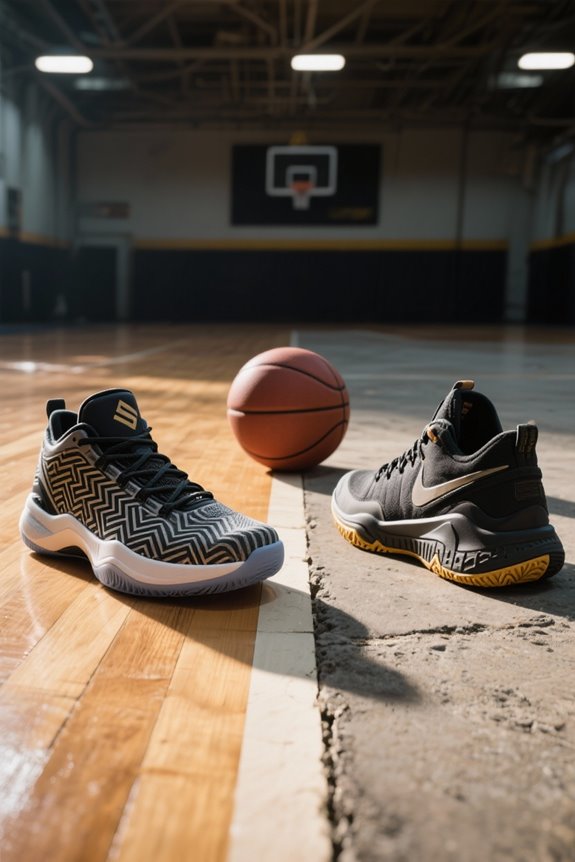
The performance of basketball shoes is greatly influenced by their traction and outsole design, which are pivotal in ensuring stability and control during dynamic play on various court surfaces. Proper traction technology utilizes durable rubber outsoles, offering a reliable grip, especially when considering outsole variations tailored for specific environments. For instance, shoes designed for outdoor play often incorporate carbon or reinforced rubber to enhance durability against rough surfaces, while softer compounds are better suited for polished indoor courts, maximizing grip. Outsole patterns, such as herringbone or multidirectional grooves, further optimize traction by accommodating quick pivots and lateral movements. Overall, a well-designed outsole not only improves performance but also reduces the risk of injury, making it essential for athletes at all levels. Additionally, many non-marking basketball shoes feature herringbone patterns that enhance grip and stability during gameplay.
Recommended Products

Remastered classic. An all-time favorite among players and sneakerheads, the Air Jordan 12 Retro is made with encapsulated Air cushioning in the heel. The upper is a mix of genuine and synthetic leather and textile styled with distinct radial stitch

CARBON FIBER DRIVE SYSTEM: Equipped with LI-NING's CARBON FIBER DRIVE SYSTEM, enhancing on-court flexibility, explosiveness, and speed while providing stable support and energy return upon landing

Nike Zoom KD 4 Men's Basketball Shoes
Cushioning and Impact Protection
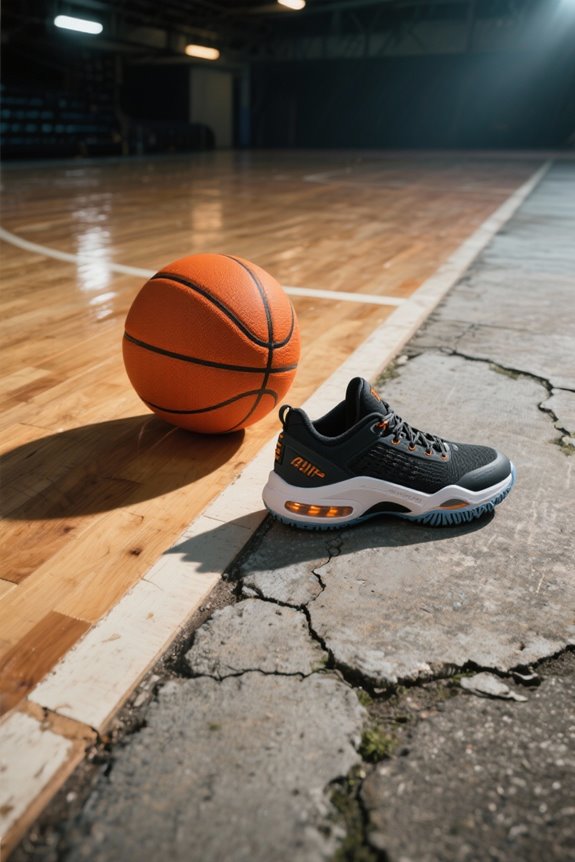
Which factors should players consider regarding cushioning and impact protection in basketball shoes? The selection of cushioning technologies directly impacts performance, with various materials offering distinct benefits. For instance, EVA foam, known for its lightweight and responsive nature, provides excellent shock absorption, making it suitable for indoor play; however, polyurethane (PU) foam offers more durability, catering to outdoor environments. Players should also consider gel and air-based systems, which guarantee that impact absorption disperses shock effectively. Additionally, compression foams balance softness and responsiveness. Understanding that different player positions may demand varying levels of cushioning can guide choices; big men often require more protection, while guards prefer a firmer feel. Ultimately, players should evaluate shock absorption ratings to make informed decisions tailored to their playing style. Moreover, certain models of basketball shoes are designed with breathable materials that enhance comfort during prolonged wear.
Recommended Products

MIZUNO ENERZY (FOAM): Offering versatility in its application, while still maintaining softness and resilience. It will help enhance performance capabilities.

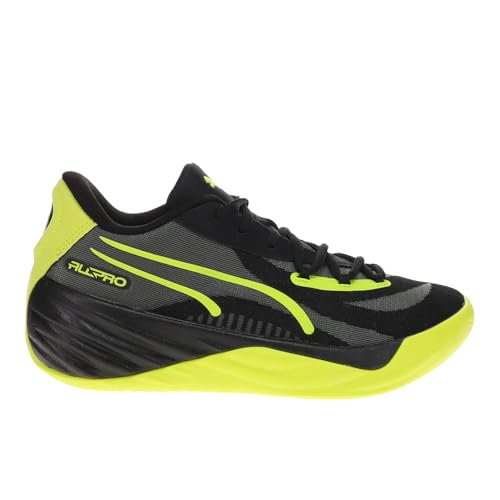
Get ready to perform at the highest level wearing the PUMA All-Pro Nitro sneakers.
Upper Material Choices
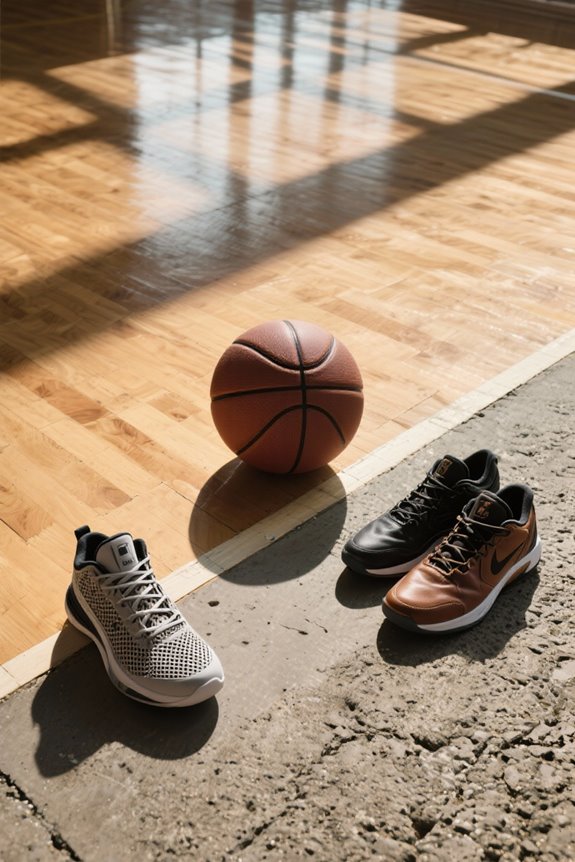
Selecting the appropriate upper material is essential for basketball shoes, as it greatly influences both performance and durability on the court. For outdoor use, shoes require highly durable uppers to withstand abrasive surfaces such as concrete and asphalt; consequently, synthetic leather is often favored due to its toughness and abrasion resistance compared to natural leather. In contrast, indoor shoes commonly utilize lighter materials, like mesh fabrics, which offer flexibility and enhanced breathability. Reinforcements around the toe box and forefoot are necessary for outdoor shoes, providing protection against scuffing and toe drags. The choice between these materials reflects the balance between durability for outdoor conditions and lightweight comfort for the smoother hardwood courts typically seen indoors. Additionally, incorporating features like adjustable elastic bands can enhance the overall fit and comfort of the shoes for different playing environments.
Recommended Products


GREATNESS RETURNS.Michael Jordan is a living legend, and he's got the legendary sneakers to match. The Air Jordan 4 Retro brings back his iconic game shoe in pristine white with speckled grey accents.

Breathability for Performance
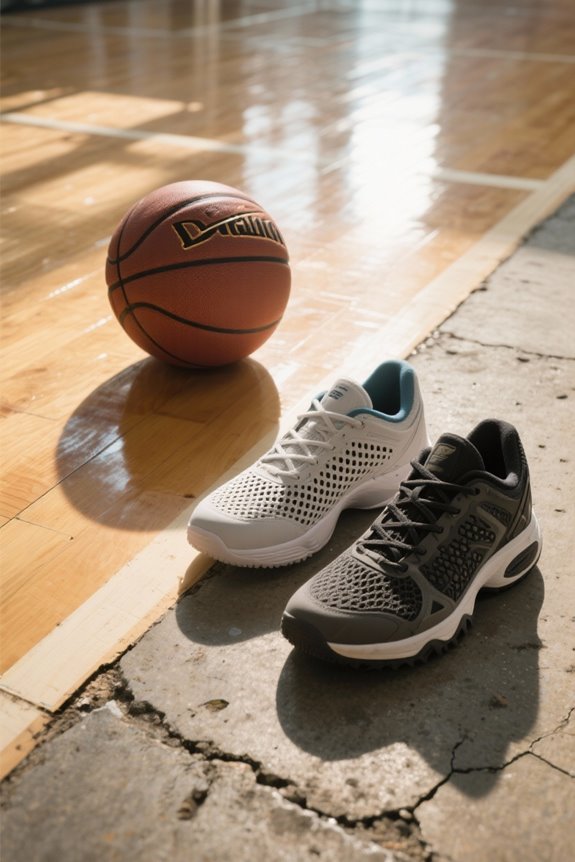
Breathability plays an essential role in the overall performance of basketball shoes, particularly for players who engage in high-intensity indoor games where foot temperature regulation is paramount. Enhanced breathability benefits include improved temperature regulation, effective moisture management, and reduced risk of blisters and overheating discomfort. Indoor basketball shoes typically utilize breathable upper materials, such as mesh and engineered knits, to promote airflow and facilitate moisture evaporation.
Moreover, breathable designs help maintain player agility and control by preventing excessive sweating, which can lead to slippage inside the shoe. While outdoor shoes may feature strategically placed perforations for limited airflow, the emphasis on durability often compromises overall breathability and moisture management. Consequently, selecting the right shoe involves balancing breathability with performance needs and the specific demands of court surfaces. Additionally, shoes with effective cushioning can further enhance comfort and performance during indoor play.
Weight Considerations
Weight considerations play an essential role in the selection of basketball shoes, greatly influencing performance across diverse playing environments.
- Weight Preferences: Indoor shoes are typically lighter, promoting speed and agility on hardwood surfaces, while outdoor shoes tend to be heavier due to enhanced durability and shock absorption for rough courts.
- Shoe Technologies: Technologies such as dual-density cushioning are often integrated into outdoor models, increasing weight but providing necessary impact protection.
- Trade-offs: While heavier shoes improve durability and support, they may reduce explosiveness. Conversely, lightweight shoes can facilitate quick movements indoors but may wear out quickly when exposed to abrasive surfaces.
Finding a balance between weight, cushioning, and durability is vital for ideal performance in either setting. Additionally, selecting shoes with advanced cushioning technology can significantly impact comfort and support while playing.
Flexibility Needs
Flexibility is a pivotal aspect of basketball shoe design, influencing both performance capabilities and overall comfort on the court.
- Indoor basketball shoes typically feature softer rubber outsoles, enhancing shoe flexibility to facilitate rapid cuts and agile maneuvers on smooth surfaces, ultimately improving performance impact.
- Conversely, outdoor shoes utilize stiffer rubber compounds for durability, which compromises flexibility but provides necessary protection against abrasive environments.
- Furthermore, indoor shoes benefit from flexible midsoles and strategically designed tread patterns that promote natural foot movement, while outdoor variants prioritize stability and tread longevity at the expense of flexion.
- In conclusion, ideal shoe flexibility enhances agility and reduces fatigue, although outdoor shoes prioritize protective elements that may hinder natural foot articulation, affecting athletic performance on rugged surfaces.
Ankle Support Options
When considering basketball shoe options, ankle support emerges as a critical factor, particularly given the sport’s demands for dynamic movements and rapid direction changes. Selecting appropriate ankle support features hinges on collar height:
- High-tops offer robust stability, ideal for players needing extra reinforcement.
- Mid-tops balance support and flexibility, suitable for versatile athletes.
- Low-tops, though below the ankle, can provide substantial support through design innovations.
Additionally, structural enhancements such as extended heel collars, extra eyelets, and firm heel counters improve containment and protect against injury risks. Effective injury prevention strategies benefit from shoes that limit harmful movements while ensuring comfort. The right ankle support not only mitigates common injuries but also boosts player confidence, facilitating improved performance on both indoor and outdoor courts.
Recommended Products


Vibrant Tie-Dye Design: Showcase your unique style with bold hues and intricate tie-dye patterns inspired by the art of tie-dye

Nike Air Diamond Turf '49ers' 2025 Men's Shoes (FZ8224 100)
Cost and Durability Factors
Cost considerations and durability requirements greatly impact the selection process for basketball shoes, particularly as players navigate between indoor and outdoor courts.
- Cost Differences: Outdoor basketball shoes typically come with a higher price tag, attributed to durable materials necessary for rough surfaces, while indoor shoes tend to be less expensive due to their lightweight design suitable for smoother hardwood.
- Durability Comparison: Outdoor shoes feature thick rubber outsoles and reinforced uppers to enhance longevity, whereas indoor shoes prioritize softer gum rubber for traction but may wear out quickly outdoors.
- Investment Implications: Choosing either type demands a cost analysis. While investing in outdoor shoes may seem costly upfront, it often leads to better long-term value, contrary to the frequent replacements required by indoor shoes used outdoors.
Recommended Products

OPENLUX Quality Service: The safety and quality of our LED parking lot lights are proudly UL & ETL certified and come with a 5-year service. Professional technical support is always available for you

SUPER BRIGHT & TYPE III: The 320 watt LED Parking Lot Light has high efficacy of 150LM/W, provides 48,000 LM at 5000K daylight, which can replace 1000~1500W MH/HPS/HID. Type III distribution provides wider illumination coverage

OPENLUX Quality Service: The safety and quality of our LED parking lot lights are proudly UL certified and come with a 5-year service. Professional technical support is always available for you
Choosing the Right Fit
Choosing the right fit for basketball shoes is critical, not only for maximizing performance but also for guaranteeing injury prevention, as improperly fitted shoes can lead to a range of issues that compromise both comfort and functionality on the court.
- Toe Room: Allow about a thumb’s width at the front, preventing blisters and discomfort while facilitating natural foot expansion during play.
- Heel Lockdown: A snug heel fit prevents slippage, enhancing stability during lateral movements and reducing injury risk.
- Width Options: Choose sizes that align with natural foot width to maintain stability and prevent excess movement.
- Arch Support: Guarantee midfoot support is snug, providing necessary stability for balance and impact absorption.
- Flex Point: Aligns with foot movement, guaranteeing comfort during dynamic actions.
Finally, thorough fit testing is essential to confirm overall comfort and stability.
Maintenance Tips for Longevity
Maintaining basketball shoes in ideal condition is essential for ensuring their longevity, enhancing both performance capabilities and overall comfort over time. Effective maintenance practices include:
Routine Cleaning
- Clean shoes post-game to remove dirt; utilize soft brushes with mild soap.
- Address stains promptly, tailoring cleaning methods to the material.
Moisture Prevention
- Air-dry shoes at room temperature post-use, placing towels inside to absorb moisture.
- Store in ventilated areas to inhibit bacterial growth and undesirable odors.
Sole and Grip Maintenance
- Regularly wipe soles to preserve traction, and avoid rough surfaces that accelerate wear.
- Replace worn soles when traction diminishes to maintain performance.
Incorporating these practices will greatly prolong the life and performance of basketball shoes, allowing players to feel a sense of belonging on the court.
Frequently Asked Questions
What Are the Best Basketball Shoe Brands for Indoor or Outdoor Play?
Top basketball shoe brands for indoor play include Nike and Jordan, praised for traction technology and agility. For outdoor use, New Balance and Adidas excel in shoe durability, ensuring performance on rugged surfaces for dedicated players.
Can I Wear Indoor Shoes Outdoors Occasionally?
Though occasionally stepping onto the court, indoor shoes face the relentless dance of wear against rugged surfaces. Their durability falters, as friction with asphalt erodes performance; hence, mindful players cherish their footwear’s longevity by limiting outdoor use.
How Often Should I Replace My Basketball Shoes?
Basketball shoes should be replaced every 350-500 miles or 70 hours of play to guarantee ideal shoe longevity. Performance factors like player intensity and court surface greatly influence the wear rate and necessary replacement frequency.
Do Color and Style Affect Performance in Basketball Shoes?
“All that glitters is not gold.” While shoe aesthetics may elevate confidence, their actual performance impact remains negligible. Psychological effects from color and style can enhance perceived comfort, influencing player mentality more than physical outputs.
Are Expensive Basketball Shoes Worth the Investment?
The cost benefit analysis suggests that expensive basketball shoes often offer superior durability compared to cheaper options. This durability comparison highlights their longer lifespan, making them a worthwhile investment for serious players committed to performance and injury prevention.


