As an Amazon Associate, we earn from qualifying purchases. Some links on this site are affiliate links at no extra cost to you. Our recommendations are based on thorough research and editorial judgment.


How Often Should You Replace Your Basketball Net?

Basketball nets should generally be replaced annually, although this timeline can vary considerably based on several critical factors. Material quality, for instance, influences durability—nylon nets may require replacement every 1 to 3 years, while chain nets excel outdoors but present safety risks. Additionally, exposure to environmental elements accelerates wear. Signs of deterioration, such as fraying, discoloration, or holes, indicate a net’s need for replacement. Understanding these factors is essential for optimizing the performance and longevity of basketball nets. Further insights on installation and maintenance can enhance their durability.
Key Takeaways
- Replace outdoor basketball nets annually due to weather exposure; indoor nets can last 1 to 3 years based on usage frequency and material quality.
- Signs of wear such as fraying threads, holes, or significant discoloration indicate immediate replacement is necessary for optimal performance.
- Higher quality materials like nylon and polyester can extend the replacement interval compared to lower quality options.
- Regularly inspect nets for signs of deterioration, cleaning dirt and mildew to maintain net integrity and performance.
- Price ranges for replacement nets vary from $5 to $25 for standard models and up to $200 for specialty options, affecting longevity.
Understanding Net Lifespan
You may be interested


Understanding the lifespan of a basketball net is essential for maintaining ideal performance and aesthetic appeal, particularly since various factors can greatly influence its durability. A thorough net lifespan assessment indicates that replacement typically occurs on an annual basis; however, the specific frequency of usage markedly affects this timeline. For heavily utilized or outdoor nets, premature replacement may be necessary, particularly if signs of visible damage arise, such as fraying threads or noticeable stretching. It is vital to recognize that net degradation is not solely time-dependent; condition-based evaluations must guide decisions. Higher-quality materials, such as nylon or chain, can extend intervals between replacements when examined regularly for wear, reinforcing the importance of proactive maintenance in preserving both functionality and appearance. Regular checks on weather resistance are crucial to ensure the longevity of your basketball net, especially in harsh outdoor conditions.
Factors Influencing Durability

Durability in basketball nets is influenced by a multitude of factors, each contributing to the net’s overall performance and longevity.
- Material Composition: Nets made from nylon and polyester are popular due to affordability but may degrade quicker under heavy use. Chain nets, made of metal, excel in outdoor settings due to superior durability.
- Weather Resistance: Outdoor exposure to elements like rain, snow, and UV rays accelerates wear. Nets with UV-resistant coatings offer enhanced longevity, while rust-proof chain nets resist moisture-induced corrosion.
- Net Thickness: Thicker nets generally provide greater wear resistance than thinner alternatives, particularly under intense play. Regular maintenance practices also enhance lifespan, such as timely inspections and protective covering during adverse weather. Additionally, selecting nets with anti-whip technology can further improve durability and gameplay experience.
Signs Your Net Needs Replacement

As basketball nets experience wear over time due to various factors including usage intensity and environmental conditions, it becomes crucial to recognize the signs indicating that a net may require replacement. A visual inspection may reveal critical indicators such as:
- Torn or frayed threads, compromising net performance.
- Discoloration, signaling prolonged exposure to the sun, which can degrade material integrity.
- Holes or gaps that reduce the net’s ability to catch and slow the basketball effectively.
- Stretched or misshaped loops that risk detachment from the rim.
- Accumulated dirt, mildew, or mold that can weaken fibers and affect overall gameplay quality.
Moreover, investing in heavy-duty basketball nets can significantly extend the lifespan of your equipment. Regular evaluation maintains peak performance, enhancing the experience for players and spectators alike, making awareness of these signs essential for preserving the integrity of the game.
Materials Affecting Longevity

The selection of materials for basketball nets considerably influences their longevity and performance under varying conditions. Understanding net materials is essential for informed choices:
- Nylon Nets: While durable and maintaining a classic “swish” sound, they often fade and fray, requiring replacement every 1 to 3 years, particularly in recreational settings.
- Polyester Nets: Offering enhanced durability and UV resistance, these nets are suitable for both indoor and outdoor use, frequently seen in professional arenas due to their longer lifespan.
- Chain Nets: Known for exceptional toughness, chain nets thrive outdoors and can last many years with proper maintenance, although they may involve injury risks.
- Cotton Nets: Less durable and prone to rotting outdoors, cotton nets are primarily decorative.
Thus, the chosen materials directly dictate the longevity impact of the basketball net. Additionally, durable materials like polyester can contribute to a longer lifespan compared to traditional options.
Recommended Products

🏀 Upgraded Thickening Design: LAO XUE 12 Loops Heavy Duty basketball net is officially sized for 21 inches in length,weighing 7.16 Ounce,to fit all standard 12 loops basketball hoops.

Fits Standard 18-Inch Basketball Rims – Official size 12-loop basketball replacement net designed to fit most indoor and outdoor basketball hoops, including driveway, school, and park courts.

STANDARD OFFICIAL SIZE-Our basketball nets feature 12 loops and measure 21 inches in total length to fit all standard-sized basketball rims.
Indoor vs. Outdoor Nets

In the discussion of basketball net longevity, it is essential to recognize the distinct differences between indoor and outdoor nets, particularly regarding their durability and suitability for various environments. Outdoor nets endure harsh weather conditions such as sun, rain, and wind, leading to more rapid degradation compared to their indoor counterparts, which benefit from a controlled setting.
Common outdoor net types include heavy-duty nylon and chain variations, specifically designed for resilience against environmental factors. Indoor nets, constructed from nylon or polyester, typically last longer due to protection from UV exposure and moisture. Consequently, while outdoor nets may require replacement annually or biannually, indoor nets can serve multiple seasons, dependent on the intensity of gameplay. Additionally, regular inspection of materials for rust or wear enhances longevity and ensures optimal performance.
Recommended Products

🏀New Upgraded: We have improved the technology to solve the problem of fading and apart of the three-color basketball net after long-term use outdoors, and greatly improve the use effect and lifetime of the basketball net.
![XXXYYY Basketball Net Replacement Heavy Duty, 2023 Professional On-Court Quality [6.88Ounce], Fits Outdoor Indoor Standard Rim, All Weather Anti Whip -12 Loops (Red White Blue)](https://m.media-amazon.com/images/I/51YxDSPeFKS._SL500_.jpg)
【STANDARD SIZE】Official on-court basketball nets heavy duty outdoor, 12 loops & 21 inches length, fits all standard size basketball hoop

STANDARD OFFICIAL SIZE-Our basketball nets feature 12 loops and measure 21 inches in total length to fit all standard-sized basketball rims.
Regular Maintenance Tips
Maintaining a basketball net is an integral aspect of ensuring peak performance and longevity, particularly given the contrasting conditions indoor and outdoor nets endure. Regular net inspection is important; players should examine their net monthly for frays, discoloration, and broken strands to catch early signs of wear. Additionally, checking for uneven hanging or sagging can indicate stretching or damage. Effective cleaning techniques involve using mild soap and water to eliminate dirt, avoiding harsh chemicals, and ensuring nets air dry completely to prevent mildew. For outdoor nets, removing cobwebs and insects is essential to preserve functionality. By adhering to these practices, players can enjoy their nets longer while ensuring maximum performance on the court. Investing in a high-strength option will also contribute to the net’s longevity and performance.
Environmental Impacts on Nets
Environmental factors play a vital role in determining the longevity and functionality of basketball nets, particularly those exposed to outdoor conditions. Prolonged UV exposure degrades nylon fibers, causing brittleness and fraying, while moisture absorption weakens synthetic nets. Additionally, extreme temperature fluctuations and harsh weather, such as wind and rain, amplify wear and potential breakage. Furthermore, chemical pollutants can accelerate material deterioration. As basketball nets face these environmental challenges, proper disposal practices become essential, as worn-out nets contribute to pollution when not recycled appropriately. Emphasizing net recycling and innovative practices enhances environmental sustainability, helping mitigate the ecological footprint of net replacement, particularly in regions with severe climatic conditions that necessitate more frequent assessments and replacements of outdoor nets.
Cost of Replacement Nets
Replacing a basketball net represents a necessary investment that varies considerably based on multiple factors, including material composition, durability, and brand reputation.
Price Range
- Standard nylon or polyester nets cost between $12 and $40, while premium options may reach $20-$25.
- Specialty nets integrated with hardware kits or portable systems can range from $60 to over $200.
Material and Durability
- Durable materials, such as braided polyethylene, command higher prices due to their longevity and weather resistance.
- Well-known replacement net brands, including Wilson and Spalding, typically offer a premium price reflecting established quality.
Net Purchase Tips
- Consider bulk purchases for cost savings and explore seasonal discounts to maximize value.
- Evaluating consumer ratings can guide informed decisions, balancing price and durability.
Recommended Products

Our Armear anti whip technology helps prevent our nets from getting tangled with the rim whenever the ball goes in the hoop

HIGH QUALITY WOVEN NYLON — Heavy-Duty, Uv-Resistant Nylon Basketball Rim Net
【Standard Size】Our basketball nets fits in all official for all standard basketball rims,which measures 12 loops, 21 inches long.
Installation Best Practices
In order to successfully install a basketball net, careful preparation and adherence to best practices are essential, as these steps considerably influence both the functionality of the net and the overall safety of the installation process.
Preparation Steps:
- Remove the old net without causing damage while ensuring all tools, including a sturdy step ladder, are ready.
- Avoid installation in adverse weather, inspect rim hooks for rust, and clean the rim to enhance stability.
Installation Techniques:
– Secure the ladder firmly and maintain three points of contact. Begin by attaching the net loop to a rim hook, then distribute remaining loops evenly.
Post-Installation:
– Conduct net adjustments by tugging gently to eliminate wrinkles, ensuring firm attachment across all hooks for peak performance during play.
Enhancements for Extended Use
Following the installation of a basketball net, which requires careful attention to detail to guarantee peak functionality and safety, numerous enhancements can greatly extend the net’s usability and longevity.
Material Enhancements:
- Opt for nets crafted from high-quality nylon or polyester fibers, as they resist fraying effectively compared to cotton alternatives.
- Utilize nets featuring weather-resistant coatings that safeguard against degradation from sun, rain, and snow.
Protection Strategies:
- Apply protective coatings, such as water-repellent sprays, which inhibit moisture absorption.
- Incorporate net upgrades, including reinforced loops and thicker cords, to enhance durability during frequent play.
Maintenance Practices:
– Conduct monthly inspections to detect early signs of wear and maintain ideal performance as long as possible.
Recommended Products

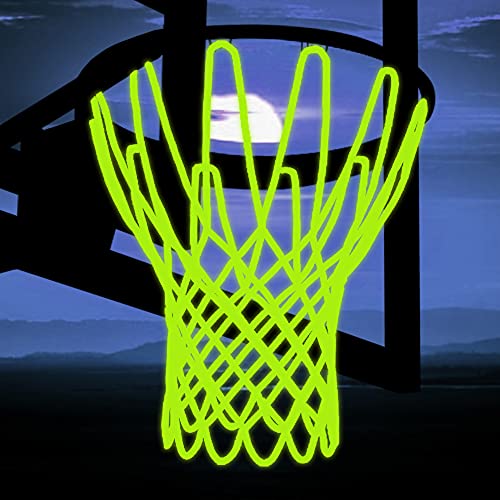
【Comprehensive Upgrade】- We have increased the weight of the luminous basketball net, using brighter fluorescent green, and better quality nylon fiber. The upgraded nightlight basketball net is heavier, brighter.
![XXXYYY Black Basketball Net Outdoor Heavy Duty, 2022 Newest Professional On-Court Quality [6.88Ounce], Fits Outdoor Standard Size Hoop, All Weather Anti Whip-12 Loops](https://m.media-amazon.com/images/I/514tLXaO1fL._SL500_.jpg)
【ATTRACTIVE COLOR】This basketball nets heavy duty outdoor is a 2022 special design, unique tonality for you, it is a great gift idea for holiday, birthday

DURABLE & WEATHER-RESISTANT: Crafted from heavy-duty, weather-resistant nylon, this basketball net is built to withstand the elements and intense play, ensuring long-lasting performance indoors and outdoors. No more worrying about rips, tears, or fading! (Net Only – Rim Not Included)
Timing Your Replacement
Determining when to replace a basketball net involves careful observation of its condition and the frequency of play it endures. Effective replacement timing relies on a well-defined maintenance schedule that considers various factors affecting durability:
- Visible Wear: Nets exhibiting fraying, discoloration, or sagging should be prioritized for replacement to maintain game quality and safety.
- Usage Frequency: High-traffic courts, such as schools and community centers, necessitate more frequent replacements, often every 6 to 12 months. Conversely, residential nets may last multiple seasons if protected from weather.
- Environmental Factors: Outdoor nets are susceptible to moisture and UV damage, increasing their replacement frequency compared to their indoor counterparts, which typically require less frequent assessments.
Regular evaluations can enhance replacement intervals, ensuring ideal play conditions for all users.
Choosing the Right Net for Your Needs
Choosing the right basketball net is essential for maximizing performance and ensuring longevity, particularly as factors such as environment, usage, and material type greatly influence net selection.
Net Types and Their Applications
- Nylon and Polyester: Primarily suited for indoor use, offering flexibility and a smooth surface, though nylon has lower durability.
- Chain Nets: Highly durable, ideal for outdoor conditions but susceptible to rust if the coating deteriorates.
- Heavy-Duty Options: These include resilient nylon or polypropylene nets, designed for extreme outdoor conditions.
Net Features to Evaluate
- Length and design, such as a standard 15-18 inches versus extended 21 inches for training, impact both aesthetic and functionality.
- Anti-whip designs reduce tangling, thereby enhancing gameplay smoothness and prolonging net life.
Recommended Products

Wilson NBA Forge Chain Basketball Net

Standard Size, Perfect Fit for All 12-Loop Rims – Our basketball net features 12 loops and measures 21 inches in total length, strictly following official specifications. It fits both indoor and outdoor standard-sized rims without sagging or tangling.

Heavy Duty Net
Frequently Asked Questions
Can I Repair a Damaged Basketball Net Instead of Replacing It?
Repairing a damaged basketball net is possible, with DIY net fixes like sewing small holes. However, net repair techniques often yield temporary results, necessitating eventual replacement for ideal performance and safety during play.
How Do Different Weather Conditions Affect Net Lifespan?
Different weather conditions greatly affect net lifespan; sun exposure accelerates material degradation, while humidity impacts fiber integrity, leading to fraying and weakening. Staying aware of these elements guarantees nets last longer and enhance gameplay experiences.
What Is the Best Way to Store Nets When Not in Use?
Proper net storage tips include using a breathable bag and keeping it in a cool, dry place. During winter storage, nets last longer when shielded from moisture, greatly extending their lifespan by up to 50%.
Are There Specific Brands Known for Durable Basketball Nets?
Goalsetter and Goalrilla are renowned net brands known for their durable materials. Their heavy-duty nets withstand outdoor elements, ensuring longevity and performance, making them ideal for enthusiasts seeking reliable equipment for both recreational and competitive play.
What Impact Does Player Skill Level Have on Net Wear?
In the game of basketball, player skill factors greatly influence net wear. Advanced players require diligent net maintenance due to intense impacts, while beginners cause less wear, fostering a balance between performance and equipment longevity.


