As an Amazon Associate, we earn from qualifying purchases. Some links on this site are affiliate links at no extra cost to you. Our recommendations are based on thorough research and editorial judgment.


Which Basketball Skills Should Beginners Focus On First?

Beginners in basketball should concentrate on mastering the Core Four skills: dribbling, passing, finishing, and defense. Dribbling enhances ball control and navigation in tight spaces, while passing facilitates team play through timed accuracy. Finishing emphasizes effective scoring techniques, particularly layups, whereas defense focuses on positioning and anticipation to thwart opponents. Additionally, developing foundational shooting techniques and rebounding skills is important for overall game performance. Emphasizing these elements will provide a solid groundwork, leading to deeper insights and advanced skill development.
Key Takeaways
- Focus on dribbling to develop ball control and navigate defenders effectively during gameplay.
- Prioritize passing skills to create scoring opportunities through accurate and timely deliveries.
- Practice finishing techniques, including layups and close shots, to improve scoring efficiency.
- Incorporate defense fundamentals to enhance positioning and anticipation against offensive players.
- Enhancing agility through dedicated training improves overall coordination and movement on the court.
Mastering the Core Four Skills
You may be interested


To excel in basketball, one must first establish a strong foundation in the core four skills: dribbling, passing, finishing, and defense. Mastery of these skills greatly enhances a player’s overall performance on the court.
- Dribbling enables players to maintain ball control and navigate defenses, with effective techniques such as the crossover and ambidextrous skills improving unpredictability.
- Passing facilitates teamwork by creating scoring opportunities through accurate, timely ball distribution while understanding spacing improves strategic decision-making.
- Finishing focuses on executing layups and close shots, essential for scoring efficiency, requiring strong ball protection to avoid opponents.
- Defense relies on effective basketball positioning and defensive strategies that limit offensive options, emphasizing anticipation and maintaining strong positioning on the court. Incorporating agility training equipment can further enhance these fundamental skills and improve overall performance.
Essential Shooting Techniques

Shooting techniques represent a critical aspect of basketball that directly influences a player’s ability to score, necessitating a thorough understanding of proper mechanics and execution.
Proper Hand Placement
Achieving effective shooting begins with proper hand placement, where the middle of the shooting hand should align directly beneath the basketball, promoting straight lift and accurate trajectory. In addition, the shooting elbow must elevate appropriately, facilitating upward force for achieving shooting arc.
Achieving Shooting Arc
To maximize scoring potential, shots should be released with an upward angle, allowing for a gentle descent onto the rim, thereby increasing target area. A higher arc not only clears defenders but also enhances shot consistency. Consequently, beginners should visualize the ball’s soft landing in the basket, fostering a sense of belonging within the game’s traditions. Utilizing tools like shot trackers can provide real-time feedback on shooting mechanics, further aiding in skill development.
Recommended Products

Enhanced Shooting Mechanics: This innovative off-hand trainer is designed for both handed shooters, helping to eliminate off-hand interference and promote proper ball rotation. Perfect your shooting skills and break bad habits with our trainer's precision support

🏆 Train Like a Game-Time Shooter – From Dribble to Release This advanced basketball shooting trainer includes dribbling goggles to elevate your skills beyond basic shooting drills. Designed as part of a complete basketball training equipment, it helps athletes improve shot transitions off the dribble—building real-game muscle memory for catch-and-shoot, pull-ups, and drive-to-shot situations. Boost shooting confidence, rhythm, and mechanics across all game scenarios.
Enhanced Shooting Mechanics: This innovative off-hand trainer is designed for both handed shooters, helping to eliminate off-hand interference and promote proper ball rotation. Perfect your shooting skills and break bad habits with our trainer's precision support
Effective Passing Strategies

Effective passing strategies serve as the cornerstone of successful basketball play, facilitating the fluid movement of the ball across the court and enhancing the overall performance of the team.
Key components of effective passing include:
- Pass Selection: Understanding when to utilize specific types of passes—such as chest, bounce, or overhead—based on defensive pressure and court dynamics is essential for maintaining offensive flow.
- Communication Techniques: Establishing non-verbal cues, such as eye contact and body positioning, can greatly improve timing and accuracy during gameplay.
Additionally, aiming passes toward a receiver’s chest or chin, utilizing backspin for control, and ensuring passes avoid defenders will create a more advantageous setting for the team. By mastering these strategies, players can enhance their individual contributions within collaborative play. Using basketball training aids can also further develop passing skills and overall gameplay effectiveness.
Recommended Products
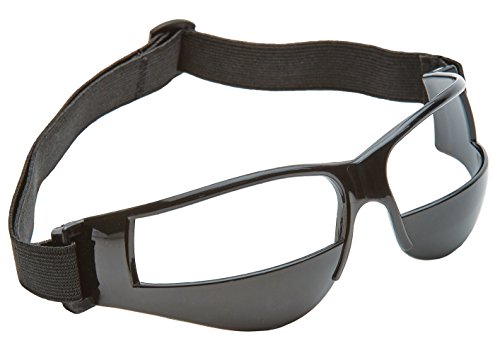
Dribble with Confidence: Unique design promotes dribbling without looking down.
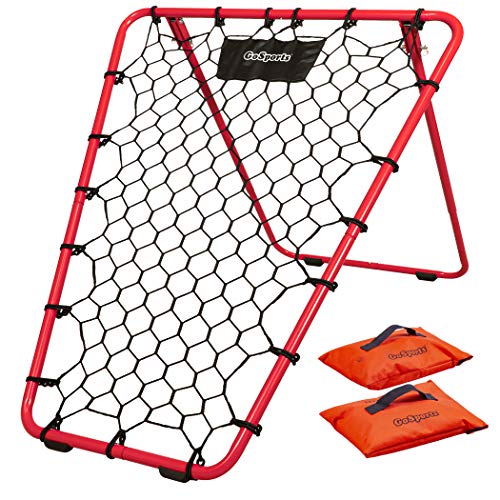
BASKETBALL REBOUNDER: Take basketball practice to the next level with this pass-back training aid! Set includes 1 foldable rebounder and 2 sand bags for added stability (sand not included)

Precision Shooting Enhancement: Elevate your basketball game with our innovative shooting training aid. Place one between your index and middle finger to create a "fork" that significantly reduces ball deflection, minimizing missed shots and enhancing shooting accuracy.
Developing Dribbling and Ball Handling

Dribbling and ball handling are integral components of basketball, foundational to a player’s ability to navigate the court effectively and maintain possession while executing offensive moves. To develop these skills, beginners should focus on the following:
- Basic Techniques: Utilize fingertips for better control, practice low and high dribbles, and develop ambidexterity by dribbling with both hands.
- Movement: Begin with stationary dribbling rhythms before advancing to full-speed dribbling, incorporating protective techniques such as the spin dribble to maintain possession while changing direction.
- Drills: Employ exercises like figure 8s and two-ball dribbling to enhance coordination under pressure.
- Awareness: Maintain head-up dribbling to guarantee court awareness, facilitating smarter decision-making while executing moves. Additionally, incorporating agility drills into training can significantly enhance a player’s overall speed and coordination on the court.
Recommended Products

1.The basketball training mat with dimensions of 47.20 x 33.80 inches, this basketball footwork mat is suited for players of all ages and sizes to hone their skills. The thoughtful design provides simple and affordable equipment to help improve basketball abilities

【Complete & Valuable Basketball Training Set】This is the most complete Basketball set on the market. It includes Basketball Training Mat, 20FT & 12 Agility Ladder, Hand Grip Strengthener, Resistance Bands. A Basketball set with everything you need to develop you into a professional athlete and stimulate your potential.
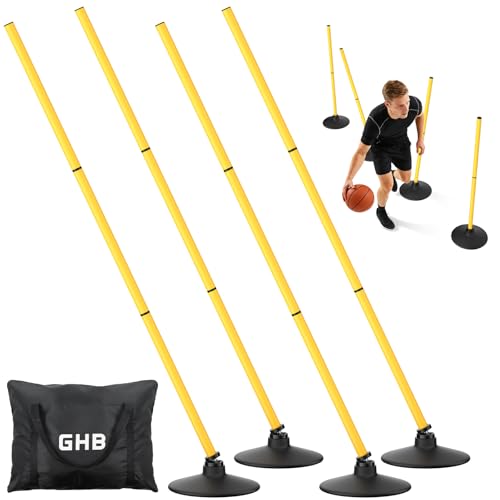
Sturdy High-Visibility Agility Poles: Made of flexible, Rugged ABS material, these 3.9ft bright yellow poles are long-lasting, weather-resistant, and highly visible for effective training
Rebounding Fundamentals and Techniques

Rebounding constitutes a fundamental aspect of basketball that greatly impacts a team’s ability to control possession and create scoring opportunities. Effective rebounding begins with proper boxing out techniques; players must locate their nearest opponent immediately following a shot and assume an athletic stance that promotes stability. By maintaining contact through strategic use of forearm pressure, players can control space and prevent opponents from gaining advantageous positions. Rebound positioning is vital; players should anticipate the shot’s trajectory and react swiftly, pursuing the ball aggressively. After securing the rebound, it is essential to protect it by chinning the ball and preparing for an outlet pass, facilitating changeover opportunities for the team and enhancing overall game performance through diligent defensive effort and positioning acumen. Moreover, utilizing proper fit considerations can help players achieve optimal performance on the court.
Recommended Products

MULTI -PURPOSE: This basketball rebounder net is perfect for catch and shoot drills, practicing post receiving, free throw rebounding and more!

Tool for improving free throw and perimeter shooting:A basketball rebounder can reduce the time spent picking up the ball, allowing you to focus more on your shooting technique. By making full use of the rebounder, you can improve your shooting accuracy more quickly

Acquire better defensive skills with an innovative training device that every coach, trainer and athlete should incorporate into their workouts.
High-Percentage Shots: Layups and More
In order to maximize scoring opportunities within a basketball game, players must gain proficiency in high-percentage shots, particularly layups, which stand as fundamental components of effective offense. Essential layup mechanics include initiating the shot approximately 10 feet from the basket at a 45° angle, utilizing proper footwork, and emphasizing upward jumps rather than forward leaps. Additionally, understanding reverse techniques enhances scoring potential by enabling shots from various angles. Beginners should focus on eliminating common mistakes, such as improper foot coordination and inadequate thigh lift, which can compromise shot accuracy. Repetitive practice of drills, including two-ball dribbling, shifts, and rhythm exercises, fosters critical muscle memory, ultimately leading to consistent and accurate layup performance. Incorporating Boost technology into their footwear can further enhance their performance on the court, providing better energy return and responsiveness.
Recommended Products
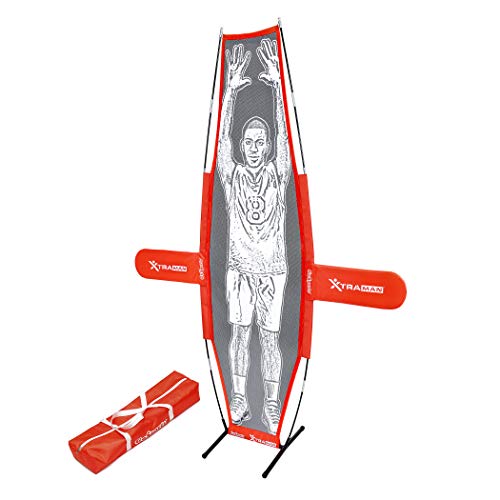
PRO DEVELOPED: The XTRAMAN was developed by GoSports in collaboration with professional basketball coaches and players to deliver a versatile training aid for players of all abilities

🏀THE PERFECT SHOT - A revolutionary training aid that physically instructs and encourages proper shooting technique. By addressing the player's most common mistake of "offhand interference", SHOOT NATURAL creates the feel of a perfect shot by discouraging the common and costly mistake of improperly using the off-hand in your shot.

IMPROVE ACCURACY - Helps keep elbow in instead of having a "flying elbow" that sticks out so you're able to stop missing right and left on your shots which means you'll be a more consistent and accurate shooter
Frequently Asked Questions
What Age Is Appropriate to Start Learning Basketball Skills?
The appropriate age to start learning basketball skills is around five years old, fostering early skill development. Engaging in fun activities supports essential motor skills, coordination, and social interactions, laying a foundation for future growth in the sport.
How Often Should Beginners Practice Basketball Skills Each Week?
Beginners should practice basketball skills 3 to 4 times weekly to foster skill improvement. This frequency allows for balanced development, muscle memory, and essential recovery, ensuring consistent growth without overwhelming the young players’ enthusiasm for the game.
Are There Any Specific Warm-Up Exercises for Basketball?
Warm-up exercises for basketball should include dynamic stretching and agility drills. Incorporating these elements enhances muscle readiness and promotes a sense of community, allowing players to connect and support each other’s progress in the sport.
How Can I Track My Basketball Skill Progress Effectively?
To track basketball skill progress effectively, one should use quantitative methods like statistical records and video analysis alongside qualitative self-assessments. This balanced approach fosters skill development while creating a sense of community through shared experiences.
What Should I Do if I Struggle With Learning a Skill?
When struggling with a skill, incorporating patience techniques and motivation strategies is essential. Embrace challenges as growth opportunities, break skills down, seek guidance, and maintain a positive mindset to foster belonging and improvement in basketball.


