As an Amazon Associate, we earn from qualifying purchases. Some links on this site are affiliate links at no extra cost to you. Our recommendations are based on thorough research and editorial judgment.


How Do You Know When Your Basketball Needs More Air?

A basketball requires additional air when it exhibits low bounce height, which indicates insufficient internal pressure. Players can assess this by performing a drop test, observing the ball’s rebound. Moreover, a soft feel when gripping the ball suggests underinflation, while proper inflation guarantees peak performance. Recommended PSI levels range from 7.5 to 8.5 for men’s and 6.5 to 8.5 for women’s basketballs. Understanding these factors is vital for maintaining performance standards and longevity; additional insights on maintenance and inflation techniques are critical.
Key Takeaways
- Check for visible wrinkles or indentations, which indicate insufficient air pressure and suggest the ball needs more inflation.
- Conduct a bounce test; if the ball doesn’t meet standard rebound height, it likely has low air pressure.
- Notice if the ball feels excessively soft during handling, which usually means it requires additional air.
- Regularly use a pressure gauge; proper inflation for men’s balls is 7.5-8.5 PSI and women’s balls is 6.5-8.5 PSI.
- Inspect for any signs of leaks or punctures, which may cause air loss and necessitate immediate inflation.
Recognizing Low Bounce Height
You may be interested


Recognizing low bounce height in a basketball is essential for maintaining peak performance during gameplay, as the relationship between internal air pressure and rebound height is well-documented. A systematic bounce comparison reveals that a ball with insufficient pressure will exhibit decreased bounce heights, consequently affecting energy retention. For example, NCAA specifications dictate certain rebound height thresholds; therefore, when a ball consistently fails to meet these benchmarks, a drop in internal pressure is likely. Additionally, testing practices, such as dropping the ball from a fixed height, facilitate accurate assessments of rebound performance. Remarkably, a ball retaining less energy correlates with inadequate internal pressure, highlighting the importance of regular evaluation to guarantee ideal gameplay conditions and sustained competitive performance. Regular checks of ball pressure gauges can help ensure that your basketball maintains optimal inflation levels.
Recommended Products

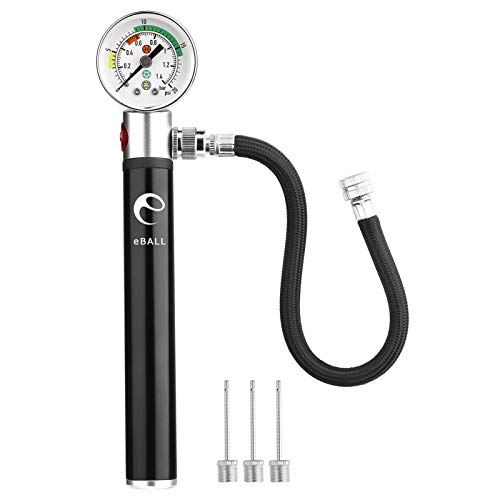
►SPECIFIC PRESSURE GAUGE: Provides an easy reference for multiple sports balls. Inflates your devices with quickness and accuracy. Reading in both BAR and PSI scales, range up to 1.4 Bar/20 Psi.

Durable Construction: Our Ball Pressure Gauge is meticulously crafted using quality materials with fine machining, ensuring durability and long-lasting performance. The solid metal body construction guarantees reliability even under intense pressure.
Assessing Ball Softness

Evaluating the softness of a basketball is essential for determining its inflation status and ensuring ideal performance on the court. A proper assessment of the ball’s surface typically reveals important indicators regarding its condition.
- A firm surface that yields slightly upon finger pressure suggests appropriate inflation.
- In contrast, a noticeably soft surface signals underinflation, while excessive hardness indicates overinflation.
- Consistent tactile feedback across the surface highlights even air distribution, while visible wrinkles or indentations reveal insufficient air pressure.
Furthermore, it’s important to recognize that an underinflated ball generally feels heavier, affecting dribbling speed, while a correctly inflated ball balances optimized weight and comfortable handling, fostering connection and belonging among players on the court. Additionally, maintaining proper inflation supports the basketball’s durability and performance on various outdoor surfaces.
Recommended Products

4 Preset Modes: The MY01 electric ball pump is an upgraded version that has been designed with 4 preset ball modes: basketball, soccer, football and volleyball; You don’t have to preset the pressure anymore; Just one-key select the ball mode you need and inflate that is more convenient to use; Also, we do reserve the custom mode that you can preset manually to inflate other balls (NOTE: it is not suitable for balls requiring pressure under 2 PSI )

SMART ENOUGH: Simply press a button, and the ETENWOLF ball pump automatically inflates each ball to the desired pressure in just 1 minute
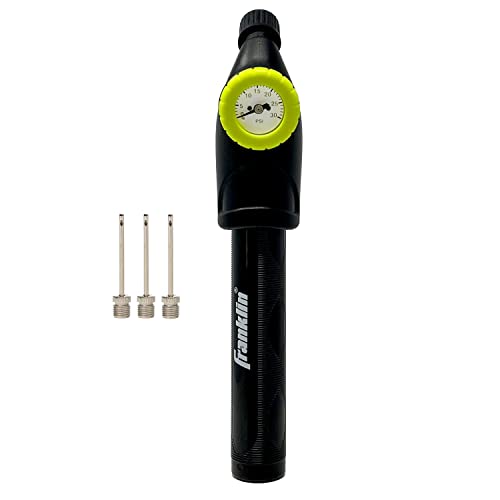
Handy dual action compact pump with built in gauge
Evaluating Rebound Consistency

A significant aspect of basketball analysis involves understanding rebound consistency, which plays a critical role in determining a player’s effectiveness and a team’s overall performance. Tracking metrics such as Offensive Rebounding Percentage (ORB%) and Defensive Rebounding Percentage (DRB%) allows for normalization of rebounds relative to opportunities, providing valuable insights. Additionally, employing a rebound missed percentage can identify stability in a player’s rebounding technique over time. The consistency in rebounding correlates with a player’s skill in anticipating shot trajectories and effectively absorbing impact during rebounds. Coaches can apply this analysis to enhance training methods, focusing on positioning and reaction drills, thereby fostering a robust rebounding mentality that guarantees the team maximizes possessions and scoring potential through improved rebound proficiency. Furthermore, understanding how basketball net materials impact durability can also influence rebound outcomes, as a well-constructed net can enhance the behavior of the ball upon entry.
Understanding Recommended PSI Levels

Establishing the correct inflation levels, measured in pounds per square inch (PSI), is essential for maximizing a basketball’s performance during play. Standard basketballs typically require inflation between 7.5 and 8.5 PSI, while women’s basketballs vary slightly, ranging from 6.5 to 8.5 PSI. The PSI significance lies in maintaining consistent bounce, feel, and control, which are crucial for skill development. To achieve peak performance, players should adhere to recommended inflation frequency, utilizing a pressure gauge for accurate measurements. Overinflation risks damage and performance decline, leading to erratic bounce and reduced control. Conversely, underinflated balls yield lower bounces, negatively affecting dribbling accuracy and gameplay rhythm. Ensuring proper PSI fosters enhanced handling and overall game reliability, supporting a cohesive playing experience. Regular maintenance can extend a basketball’s lifespan, enhancing its overall performance.
Recommended Products

PERFECT FOR ALL SPORTS BALLS: This ball pump kit is compatible with all kinds of sports balls. Inflate basketballs, soccer balls, footballs, volleyballs and more in no time

Country Of Origin: China

Automatic Electric Ball Pump:Electric Ball Pump designs with intelligent pressure detection and stop function,just preset the correct ball PSI,press to start and it will automatically stop inflating once the preset pressure is reached. Smart and easy to use
Conducting a Drop Test

Conducting a drop test serves as an effective method for evaluating a basketball’s inflation level, particularly when precise pressure gauges are unavailable. This assessment relies on a well-organized drop test setup, which should include marking a vertical surface with measurement tape at regular intervals. The standard drop height for this test is approximately 1800 mm (6 feet), allowing the ball to rebound to around 1300 mm (49–54 inches).
When executed properly, this method guarantees measurement accuracy through multiple trials, where consistent rebound heights indicate air pressure adequacy. Significantly, environmental conditions and surface types can affect results, warranting careful consideration during the execution. Ultimately, the drop test provides a quick, non-invasive evaluation of a basketball’s inflation status. Additionally, over-door basketball hoops can also benefit from proper inflation for optimal performance during play.
Recommended Products
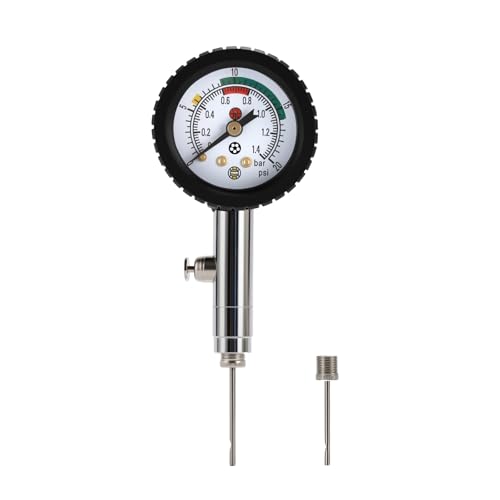
Premium Metal Build with Gear Protection Cover – Made of high-quality materials, sturdy and rust-resistant. The solid metal body and black gear cover protect internal components for long-lasting durability.

【Smart Electric Ball Pump】Built-in intelligent pressure detection and auto-stop technology, the air pump takes the hassle out of inflation. Simply preset your ball’s required level of pressure (PSI) , press start, and it will inflate precisely to the target pressure then shut off automatically, saving your time and effort.

Accurate Pressure Control:Designed to detect and control accurate pressure. BAR and PSI scale reads up to 1.4 Bar/20 Psi. The recommended air pressure for football: 12.5-13.5 Psi, volleyball: 2.5-3.2 Psi, basketball: 7.1 to 8.7 Psi.
Hand Feel Test for Firmness
When evaluating a basketball’s inflation level, the hand feel test serves as a practical and effective method to assess firmness without the need for specialized instruments. This test involves applying gentle finger pressure, allowing players to gauge the ball’s tactile feedback accurately. A properly inflated basketball exhibits slight surface give, ensuring balanced firmness; conversely, an overinflated ball feels rigid and unyielding, while an underinflated ball demonstrates excess deformity and a spongy texture. For accurate assessment, fingertips should be used at multiple points on the surface to confirm uniform inflation. Conducting this test prior to gameplay enables players to maintain ideal air pressure, thereby enhancing performance parameters such as bounce and handling precision, leading to a more reliable playing experience. Additionally, maintaining the recommended PSI levels is crucial for effective play and longevity of the basketball.
Environmental Factors Impacting Pressure
Environmental factors play an essential role in influencing the air pressure within a basketball, necessitating careful consideration by players and coaches alike.
- Temperature Variations: Colder temperatures decrease air pressure due to contraction, while higher temperatures can lead to overinflation as air expands.
- Humidity Effects: Moisture can reduce effective air pressure by altering the ball’s volume and air-tightness, with wetness potentially decreasing pressure by 0.6-0.9 PSI.
- Wind Chill: Wind accelerates cooling through evaporative heat loss, contributing to pressure drops in external environments.
- Altitude Adjustments: Reduced atmospheric pressure at higher altitudes can cause internal basketball pressure to increase, affecting gameplay.
- Surface Conditions: Playing on various surfaces influences temperature and pressure dynamics, impacting ball performance considerably.
Understanding these factors guarantees ideal ball condition and performance during play.
Best Practices for Maintenance and Inflation
Maintaining ideal air pressure within a basketball is integral to ensuring its performance and longevity, directly impacting gameplay and player experience. Effective maintenance routines encompass regular checks on inflation levels, targeting a pressure range between 7.5 and 8.5 PSI.
- Utilize a pressure gauge for accurate measurements and perform a bounce test to verify proper inflation.
- Employ proper inflation techniques by using a dedicated pump with a moistened needle, inserting it carefully to avoid damage.
- Regularly inspect balls for leaks and store them in a cool, dry environment to maintain peak condition.
Frequently Asked Questions
How Often Should I Check My Basketball’s Air Pressure?
Checking a basketball’s air pressure before each practice or game is essential for ideal performance. Consistent basketball maintenance guarantees proper air pressure, enhancing gameplay and providing a sense of belonging within the team environment.
Can I Use a Car Tire Gauge to Measure Basketball Pressure?
Using a car tire gauge for basketball pressure measurement is not advisable due to gauge accuracy limitations. Specialized gauges guarantee precision within the required PSI range, promoting ideal performance and enhancing the basketball experience for enthusiasts.
What Is the Best Type of Pump for Inflating Basketballs?
In the game of hoops, both hand pumps and electric pumps serve their purpose. Hand pumps offer control and accessibility, while electric pumps provide effortless precision, ensuring every ball is ready for a thrilling match with friends.
Does Playing on Grass Affect Basketball Pressure and Performance?
Playing on grass impacts basketball performance considerably, creating a performance difference due to its softer surface. This softness absorbs energy, resulting in lower bounce consistency and altered player interactions, affecting overall gameplay experience.
How Do I Properly Store My Basketball to Maintain Pressure?
To maintain pressure, store the basketball in a cool, dry place, ensuring proper storage practices. Partial deflation aids air retention, while avoiding moisture and sharp objects helps preserve its condition for shared moments on the court.


