As an Amazon Associate, we earn from qualifying purchases. Some links on this site are affiliate links at no extra cost to you. Our recommendations are based on thorough research and editorial judgment.


What PSI Should You Inflate Your Basketball To For Optimal Performance?

For ideal performance, basketball inflation should align with specific PSI ranges. Indoor leather basketballs perform best at 7.5 to 8.5 PSI, whereas outdoor rubber and synthetic varieties excel at 8 to 9 PSI. Youth and training balls should be inflated between 6.5 and 7.5 PSI for skill development. Maintaining proper inflation enhances control and bounce consistency, while also promoting player safety by preventing injuries related to improper handling. Further insights on inflation techniques and best practices follow.
Key Takeaways
- Inflate indoor leather basketballs to a pressure range of 7.5 – 8.5 PSI for optimal performance and control.
- For outdoor rubber and synthetic basketballs, aim for 8 – 9 PSI to enhance bounce and durability.
- Youth and training basketballs should be inflated between 6.5 – 7.5 PSI to support skill development effectively.
- Maintaining consistent PSI is crucial for predictable ball behavior, impacting dribbling, shooting, and overall gameplay.
- Regularly check inflation using pressure gauges or bounce tests to ensure the ball is performing at its best.
Understanding Basketball PSI
You may be interested


Air pressure in basketball, a vital component of the game’s equipment management, is measured in pounds per square inch (PSI) and is essential for guaranteeing peak performance. Historically, basketball organizations like the NBA and FIBA have established norms governing air pressure, which directly impacts player performance.
- Ideal Bouncing and Control: Correct PSI guarantees ideal bounce, enhancing responsiveness during gameplay.
- Impact on Dribbling and Shooting: Inadequate pressure can result in unpredictable ball behavior, therefore impairing dribbling accuracy and shooting consistency.
- Standards for Play: The recommended pressure range for professional play generally falls between 7.5 and 8.5 PSI. Additionally, using high-quality basketball shoes can further enhance player performance and comfort on the court.
Understanding these parameters is vital, as improper inflation can negatively affect performance and the longevity of the basketball, ultimately influencing game outcomes.
Recommended PSI Range for Different Basketballs

When determining the recommended PSI range for various basketball types, it is essential to take into account the specific materials and intended use of each ball, as these factors greatly influence performance and handling.
- Indoor Leather Basketballs: Ideal inflation ranges from 7.5 to 8.5 PSI, ensuring consistent bounce and improved accuracy.
- Outdoor Rubber & Synthetic Basketballs: Typically inflated between 7 to 9 PSI, these balls tolerate rough surfaces but perform best at 8-9 PSI.
- Youth and Training Basketballs: Recommended at 6.5 to 7.5 PSI, this range supports skill development, reducing injury risk for younger players.
Inflation guidelines, consequently, vary greatly based on the intended use and construction of the basketball, underscoring the importance of proper basketball pressure for ideal performance. Moreover, choosing the right basketball size and age appropriateness can further enhance the playing experience and skill development.
Recommended Products

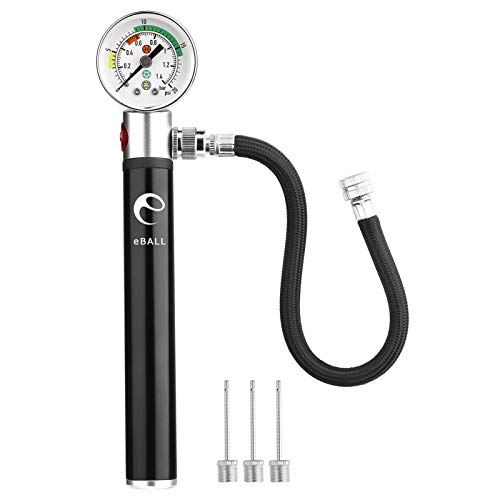
►SPECIFIC PRESSURE GAUGE: Provides an easy reference for multiple sports balls. Inflates your devices with quickness and accuracy. Reading in both BAR and PSI scales, range up to 1.4 Bar/20 Psi.

Durable Construction: Our Ball Pressure Gauge is meticulously crafted using quality materials with fine machining, ensuring durability and long-lasting performance. The solid metal body construction guarantees reliability even under intense pressure.
Importance of Proper Basketball Inflation

The significance of proper basketball inflation extends beyond mere performance, playing an essential role in multiple aspects of the game. Correct inflation levels enhance player performance by improving dribbling control, facilitating accurate passing, and ensuring consistent shot outcomes. Inadequate inflation frequency leads to inconsistencies in bounce height, affecting muscle memory and responsiveness. Additionally, the risk of injury increases with overinflated balls, which impose stress on hands, while underinflated balls can lead to awkward handling injuries. Proper inflation preserves ball durability and extends lifespan, making regular pressure checks critical. Ultimately, standardized inflation promotes fairness in competitive settings, allowing players to engage in the sport with confidence in their equipment’s performance and behavior, thereby reinforcing their sense of belonging within the game. Moreover, maintaining the correct PSI for basketballs is essential for optimal performance and safety during play.
Effects of PSI on Gameplay

Proper basketball inflation, quantified in pounds per square inch (PSI), fundamentally influences various aspects of gameplay, with implications that extend to ball performance, player control, and overall competitive dynamics. The ideal PSI range, typically 7.5–8.5, strikes a balance between adequate ball velocity and grip sensitivity, allowing for precise play. Higher PSI increases bounce height, enhancing ball speed yet potentially compromising control, while lower PSI can provide a softer touch that may impede precision in shooting and passing. Consistent PSI facilitates predictable ball behavior, critical for timing in high-pressure situations. Deviations from the ideal range can lead to erratic gameplay, affecting team strategy and player performance, emphasizing the critical need for regular inflation checks to maintain fairness and efficiency on the court. Additionally, proper traction and grip are vital for quick movements, highlighting the importance of maintaining optimal ball inflation for peak performance.
Optimal Bounce and Control

How does basketball inflation impact bounce height and control? The ideal inflation range of 7.5 to 8.5 PSI optimizes bounce dynamics and enhances ball handling. Most manufacturers recommend between 7 and 9 PSI, with 8 PSI being a common target for standard basketballs. Proper inflation prevents erratic bounce, ensuring predictable control during gameplay. When a basketball is dropped from 180 cm, an ideal rebound height of 120–140 cm indicates correct pressure, while deviations suggest improper inflation. Additionally, consistent inflation supports reliable dribbling and passing by diminishing slip risk. It is vital to debunk inflation myths, as both under- and overinflation adversely affect performance and longevity, reinforcing the importance of maintaining recommended PSI for him and her who share a passion for basketball. Moreover, stability features like heavy bases filled with sand or water in portable hoops help provide a better playing experience when the ball is properly inflated.
Impact of Inflation on Shooting Accuracy
Inflation levels in basketballs markedly influence shooting accuracy, as the relationship between internal pressure and ball dynamics plays an essential role in a player’s performance during gameplay.
- Softer, underinflated basketballs exhibit increased deformation at launch, which may disrupt consistency in shot biomechanics.
- Lower internal pressure reduces molecular collisions, resulting in less bounce and altering trajectory.
- Theoretical models propose that accuracy could remain relatively stable once deformation is accounted for, but practical differences between ideal and suboptimal inflation pressures often require controlled testing to evaluate.
- Variability in player skill and psychological factors, such as performance pressure and muscular control, further complicates the measurement of shooting accuracy related to inflation pressure.
Ultimately, achieving the ideal inflation range of 8-9 PSI harmonizes control, bounce, and trajectory for improved shooting performance. Regular pressure checks are essential to maintain optimal inflation and enhance gameplay quality.
Safety Concerns With Over and Under Inflation
The significance of ideal basketball inflation extends beyond performance metrics, encompassing essential safety concerns associated with both overinflation and underinflation. Adhering to established inflation standards is crucial for minimizing player injuries, as improper PSI can greatly affect gameplay safety.
- Overinflation leads to increased ball hardness, resulting in greater impact forces that may cause hand pain or minor injuries, such as bruises. Additionally, extreme overinflation risks rupture, creating flying debris that can injure players.
- Underinflation, conversely, causes unpredictable rebounds, increasing the likelihood of finger injuries and muscle fatigue due to the exertion required for control.
Both conditions compromise ball integrity, potentially leading to erratic behavior that jeopardizes player safety during critical moments of play.
Maintaining Ball Durability Through PSI
Maintaining proper basketball inflation pressure is essential for preserving the durability of the ball, as it directly influences the integrity of its components and overall lifespan. Adhering to the recommended PSI of 7.5 – 8.5 prevents overstressing seams, mitigating the risks of splits and surface damage. Proper techniques, such as careful inflation and monitoring during long term storage, further enhance durability by minimizing fluctuations that can degrade material elasticity. A controlled environment, free from extreme temperatures, assists in stabilizing PSI and reducing fatigue in materials. Consistent adherence to correct inflation levels maintains the ball’s shape, improving its structural integrity while ensuring peak performance, ultimately extending the overall longevity of the basketball across various playing conditions.
Tools and Techniques for Measuring PSI
Accurate measurement of basketball inflation pressure is crucial for peak performance, necessitating a diverse array of tools and techniques tailored for precise PSI evaluation. Among the most respected instruments are pressure gauges, available in digital and analog forms. Digital pressure gauges offer rapid, precise readings with clear displays, while analog gauges utilize dials for straightforward measurement. Additionally, inline pressure gauges, integrated within some pumps, facilitate concurrent inflation and monitoring. For those who prefer low-tech methods, the drop test technique estimates PSI based on rebound height, providing an accessible means of evaluation. Ultimately, utilizing appropriate inflation techniques, including specialized basketball pressure gauges, guarantees accurate control of ball pressure, fostering ideal performance and enhancing the game.
Recommended Products
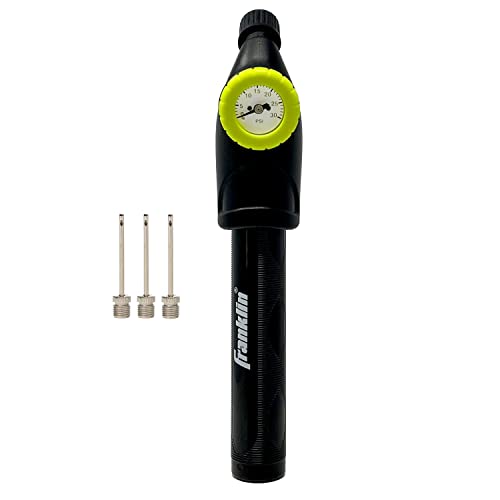
Handy dual action compact pump with built in gauge

PERFECT FOR ALL SPORTS BALLS: This ball pump kit is compatible with all kinds of sports balls. Inflate basketballs, soccer balls, footballs, volleyballs and more in no time

Country Of Origin: China
Practical Inflation Methods
Practical inflation methods encompass a variety of techniques and tools that collectively optimize basketball performance by ensuring the correct air pressure within the ball.
- Needle Lubrication: Applying a small drop of glycerin to the inflation needle prevents valve damage during insertion, facilitating smooth and effective inflation while minimizing leakage.
- Pump Selection: Utilizing the appropriate pump, whether hand, electric, or double-action, is essential; these should be equipped with a compatible needle adapter typically ranging from 2-3 mm. Electric pumps with automatic shut-off features effectively prevent over-inflation.
- Usage Techniques: Consistently maintain a moderate pumping force and rhythm to avoid inadvertently dislodging the needle or damaging the valve, preserving the ball’s performance integrity throughout its use.
Recommended Products

Ball pump needles, for basketball, soccer ball, volleyball

Nice materials: the ball pump needles are made of stainless steel which is durable and can prevent itself from being bent or damaged so that the needles can serve you for a long time

3 times wider grip zone on ETENWOLF's ball pump needles, enough space to hold tight and screw in air pump easily
Testing Proper Inflation Without a Gauge
Evaluating proper inflation of a basketball without the use of a pressure gauge can be achieved through several practical methods that offer insights into the ball’s condition.
- Bounce Test: A drop from three feet should rebound between two feet one inch and two feet six inches, indicating proper inflation.
- Diameter Measurement: Using a flexible tape measure around the ball’s largest circumference can signal inflation status, with diameter increases suggesting overinflation.
- Manual Feel: Pressing the ball’s surface offers tactile feedback; it should yield slightly under normal conditions.
- Sound Response: A sharp bounce noise indicates good inflation, while dull sounds suggest low pressure.
- Consistency Checks: Regularly performing these tests while considering environmental factors is essential for maintaining ideal PSI.
Manufacturer Recommendations for Basketball Inflation
Understanding manufacturer recommendations for basketball inflation is essential for maximizing gameplay and preserving the integrity of the equipment.
- Spalding Guidelines: Typically recommends a pressure range of 7 to 9 PSI, with specific models displaying inflation instructions near the valve.
- NBA Standards: Official basketballs should be inflated to between 7.5 and 8.5 PSI, guaranteeing ideal play characteristics.
- Wilson and FIBA: These groups suggest inflation levels around 8 to 9 PSI, influenced by temperature and conditions.
- Impact of Inflation: Proper inflation directly affects bounce consistency, player safety, and the longevity of basketball materials.
Utilizing correct inflation techniques, including using a pressure gauge and following printed guidelines, guarantees proper performance and minimizes risks associated with overinflation or underinflation.
Recommended Products

Automatic Electric Ball Pump:Electric Ball Pump designs with intelligent pressure detection and stop function,just preset the correct ball PSI,press to start and it will automatically stop inflating once the preset pressure is reached. Smart and easy to use
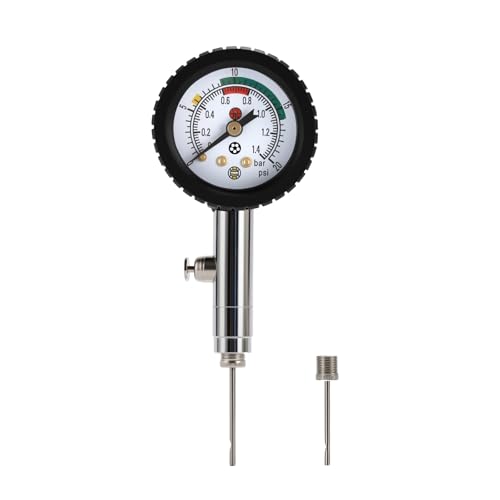
Premium Metal Build with Gear Protection Cover – Made of high-quality materials, sturdy and rust-resistant. The solid metal body and black gear cover protect internal components for long-lasting durability.

【Smart Electric Ball Pump】Built-in intelligent pressure detection and auto-stop technology, the air pump takes the hassle out of inflation. Simply preset your ball’s required level of pressure (PSI) , press start, and it will inflate precisely to the target pressure then shut off automatically, saving your time and effort.
Best Practices for Basketball Care and Maintenance
Effective maintenance of basketball equipment considerably contributes to performance, longevity, and player safety, complementing the insights provided by standardized inflation guidelines previously discussed.
Basketball Cleaning
Regularly wipe basketballs after each use with a soft cloth to remove dirt and sweat, maintaining ideal grip. Depending on the material—leather, synthetic, or rubber—use appropriate cleaners, avoiding harsh chemicals that could damage surfaces. Leather balls require mild detergent or leather shampoo and should be dried immediately.
Storage Practices
Store basketballs in a cool, dry area, away from direct sunlight to prevent material degradation. Confirm they are fully dried before storage to avoid mold, and elevate them off hard surfaces to prevent abrasions. Keeping basketballs inflated to recommended PSI supports shape retention without overinflation risks.
Recommended Products
ULTIMATE SNEAKER CLEANING KIT - Tough on persistent stains without compromising the look, feel and shape of shoes.

【Packaging Includes】The 267 pieces card cleaning kit contains 2 x Cleaning Spray 30ml,1 x Polishing cream 50g,1 x Large repair stick,2 x Small repair stick,2 x Round acrylic board,2 x EVA Black pads,10 x Sponge head applicator,20 x Cleaning cotton,100 x Double pointed cotton swabs,10 x Felt absorbent sheet,4 x Pressure clamps,1 x Small plastic box,1 x Microfiber Square Towel,1 x Black Tweezers,1 x User Manual, 1 x Magnifying Glass,2 x Straws,2 x Glove,10 x Ultra Fine Suede Cleaning Cloth,100 x card sleeves.This card flattening kit meets long-term card maintenance needs.

Restore and Preserve Grip: Geko is formulated to restore and preserve golf grips, baseball bat wraps, tennis wraps, and pickleball paddle wraps; ensuring a secure and consistent hold on your gear, and improving speed, precision, and control.
Frequently Asked Questions
Can I Use an Air Compressor to Inflate My Basketball?
Using an air compressor to inflate a basketball can compromise basketball safety. High-pressure delivery risks overinflation, potentially damaging seams and valves. Caution and proper equipment are essential to prevent performance issues and guarantee the ball’s longevity.
Does Temperature Affect the PSI of My Basketball?
Temperature effects greatly influence basketball performance by altering internal PSI. Colder temperatures lower pressure, reducing bounce and responsiveness, while higher temperatures can lead to overinflation, making the ball harder and less manageable. Consistent adjustment is essential.
What Should I Do if My Basketball Feels Too Hard?
When a basketball feels overly firm, the player should employ softening techniques like gentle pressure adjustments to relieve air. This process enhances handling, ensuring camaraderie and fluid play among teammates, echoing the rhythm of a shared game.
How Often Should I Check My Basketball’s PSI?
Regularly checking a basketball’s PSI, preferably daily or weekly for active players, greatly enhances performance impact. By ensuring ideal inflation frequency, players maintain control and consistency, fostering a stronger sense of belonging within the sport.
Are There Different PSI Recommendations for Youth Basketballs?
Yes, youth basketballs have different inflation pressure recommendations, generally ranging from 6 to 7.5 PSI. These lower levels accommodate younger players’ needs, enhancing grip and control, fostering a sense of belonging on the court.


