As an Amazon Associate, we earn from qualifying purchases. Some links on this site are affiliate links at no extra cost to you. Our recommendations are based on thorough research and editorial judgment.


What Height Should You Set Your Portable Basketball Hoop For Different Ages?

To enhance skill development and enjoyment in youth basketball, portable hoop heights should be set according to age groups: Ages 1-4 benefit from heights between 2.9 to 3.3 feet; Ages 5-6 use 6 to 7 feet; Ages 7-8 should practice at 8 feet; Ages 9-11 use 9 feet; and Ages 12 and older require the standard height of 10 feet. Adjustments for regulation play are essential for older teens and adults, ensuring proper technique development. Further insights await regarding ideal equipment and adjustments.
Key Takeaways
- For ages 1-4, set the hoop height between 2.9 to 3.3 feet to support early motor skills.
- For ages 5-6, adjust the hoop height to 6 to 7 feet for basic shooting practice.
- Ages 7-8 should have the hoop height at 8 feet to encourage layup and shooting techniques.
- Set hoop height at 9 feet for children aged 9-11 to challenge accuracy and enhance dribbling.
- For ages 12 and above, use the regulation height of 10 feet for competitive skill development.
Hoop Height for Ages 1-4: Toddlers and Preschoolers
You may be interested


When considering hoop height for toddlers and preschoolers aged 1 to 4, it is essential to prioritize age-appropriate dimensions that promote skill development and enjoyment. Hoops set between 2.9 feet and 3.3 feet facilitate toddler engagement, allowing for achievable goals that support early motor skills while minimizing frustration. At these heights, toddlers can experience success, reinforcing their interest in the sport. Additionally, these low hoops enhance fine motor skill development and promote eye-hand coordination, laying a solid foundation for further growth in physical abilities. Portable hoops with adjustable settings empower caregivers to adapt heights as children mature, ensuring continuous progression while fostering a sense of achievement that encourages ongoing participation in basketball activities. Moreover, providing proper support and performance through suitable hoop heights can significantly enhance their overall experience and encourage a lifelong love for the game.
Recommended Rim Size and Basketballs for Young Players

The recommended rim size and basketball types for young players are essential considerations that markedly influence their foundational skill development in basketball.
- Regulation rim diameter measures 18 inches; however, portable hoops for younger players may feature smaller rim sizes, such as 15 inches, to facilitate skill-building.
- Children under 8 years typically utilize size 3 basketballs, while ages 9-11 shift to size 5 basketballs.
- By ages 12-14, youth should employ size 6 basketballs, which serve as a bridge to standard adult sizes.
Selecting the correct basketball sizes and rim dimensions is critical for optimizing ball control and shooting mechanics. By ensuring age-appropriate equipment, young players can effectively cultivate their skills, fostering confidence and enjoyment in the game. Additionally, proper maintenance of equipment ensures that the gear remains in optimal condition for use, which is vital for consistent practice and improvement.
Recommended Products

(3-PACK) SIZE 3 YOUTH BASKETBALL - 7-INCH DIAMETER: Includes three 7-inch orange basketballs designed to official Size 3 specifications. PlayBolt Mini Basketballs are perfectly sized for younger players and beginner athletes. The smaller circumference and lighter weight make it easier for kids to grip, control, and develop proper shooting and dribbling skills.

2 PACK WATER BASKETBALLS: Make a splash on your next pool day; No more chasing balls out of the pool with this water basketball 2 pack with included ball pump
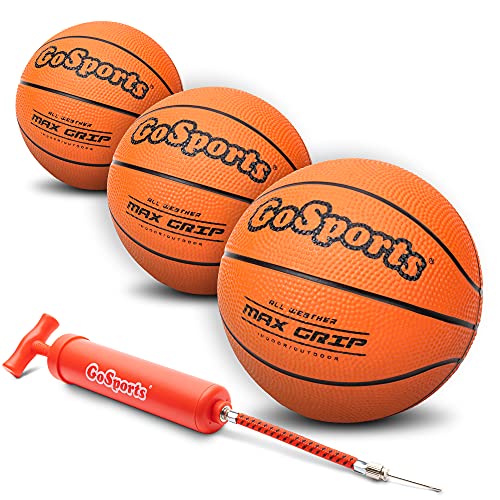
THREE PACK: Comes with 3 premium 7 inch diameter mini rubber basketballs perfect for mini hoops
Focus on Fun and Motor Skill Development

Focusing on fun and motor skill development is paramount in optimizing the basketball experience for young players, as it establishes the foundation for lifelong engagement with the sport. Age-appropriate hoop heights create an environment conducive to enjoyable skill-building, integrating fun activities and motor games that enhance coordination.
- Ages 5-6: Height of 6 to 7 feet promotes basic shooting form without physical overwhelm.
- Ages 7-8: An 8-foot hoop supports the introduction of layups and shooting techniques.
- Ages 9-11: Setting hoops at 9 feet challenges accuracy and fosters dribbling skills.
- Ages 12+: Utilizing a regulation 10-foot hoop prepares players for competitive engagement, emphasizing thorough skill development.
Such structured height adjustments facilitate motivation and confidence, simultaneously reducing frustration and maintaining a lasting connection to basketball. Additionally, integrating durable equipment into training can further enhance skill acquisition and enjoyment on the court.
Importance of Sturdy and Stable Construction

Establishing a robust and stable construction for portable basketball hoops greatly influences both player safety and performance stability during gameplay, thereby complementing the foundational motor skill development emphasized for young athletes. The choice of construction materials, such as high-strength steel, enhances stability features, ensuring the hoop can withstand dynamic forces common in gameplay. Steel poles, while heavier, provide durability and rust resistance, making them ideal for outdoor conditions. Additionally, the base design contributes considerably to overall stability; a well-weighted base filled with sand or water prevents tipping and allows user control. Regular maintenance and inspections are essential, as they sustain the balance and integrity required for safe usage, thereby fostering a secure environment for aspiring players to develop their skills. Moreover, models featuring shatterproof backboards significantly improve durability during intense games, ensuring long-lasting performance.
Recommended Products

【Inspire Active Play & Family Fun】The basketball hoop encourages kids to step away from screens and enjoy healthy outdoor activity. It's the perfect centerpiece for family fun in the driveway, backyard, or at poolside, helping children develop motor skills and a love for sports through playful shooting games

【Height Adjust Easily & Quickly】:Unlike others' basketball hoops with fixed positions, our basketball hoop is equipped with a special crankshaft rocker, allowing you to effortlessly and easily break free from the constraints of fixed positions. It can be adjusted to any height you desire within 5.3 - 10 feet range,5.3-7.3FT by 2 poles installed, 8-10FT by 3 poles installed.

MAXIMUM STABILITY: Stabilize basketball hoops, plastic sign bases, umbrella stands, volleyball nets, boxing equipment and more using the H2OLD Base Gel. This super absorbent polymer replaces sand or water used as a ballast weight. Combined with water, this powdered substance quickly turns into gel. The resulting firm and stable gel is freeze-thaw durable, making it perfect for use in any climate.
Portable and Height-Adjustable Options

Although many factors contribute to player development in basketball, the incorporation of portable and height-adjustable options greatly enhances the training experience for athletes at various ages. These basketball accessories typically feature height adjustments ranging from 7 to 10 feet, aiding players in skill refinement by allowing them to practice at appropriate hoop heights. Most portable hoops employ user-friendly mechanisms, ensuring seamless alterations for player safety and convenience. Incremental changes of 6 inches to 1 foot facilitate gradual height progression, essential for growing players. Furthermore, the portable design enables relocation and storage, enhancing practice flexibility. Durable construction and stability are paramount, as robust bases and secure locking systems prevent tipping, ultimately fostering a safe and effective training environment. Additionally, height adjustability allows for customization according to player skill levels, promoting better shooting accuracy.
Recommended Products

Ideal Basketball Hoops: The DUMOS Basketball Hoop is perfect for both indoor and outdoor use . It ' s a portable and adjustable system that can be utilized by different ages , with height adjustment from 6.1 feet to 10 feet , making it perfect for family fun

More Stable & Durable: The 10ft Basketball Stand comes with a sturdy stand and a upgraded base to which more water or sand can be added to ensure stability and durability. It also comes with wheels for easy transport and setup

【SECURE STABILITY & DURABLE】Outdoor Basketball Hoop uses thickened steel support rods and weather-resistant coatings which are built to withstand various weather conditions. our basketball hoop features a large PC backboard with excellent visibility and impact resistance. The 18" metal basketball rim comes with a durable net, and the steel pole with a smooth finish can effectively prevent rust, ensuring long-lasting performance
Hoop Height for Ages 5-7: Young Beginners
When introducing young beginners aged 5 to 7 to the fundamentals of basketball, a critical component lies in the selection of an appropriate hoop height. For this age group, an ideal hoop height ranges from 6 to 7 feet, as this accommodates their physical capabilities and promotes skill retention. Lowering the hoop minimizes excessive stretching or jumping, thereby fostering the development of proper shooting techniques. By gradually increasing the height within this range, individual differences in strength and height can be addressed, enhancing personal growth. Setting the hoop correctly not only encourages early exposure to basic basketball skills but also reduces frustration, allowing young players to experience success, which is essential for maintaining interest in the sport and promoting overall enjoyment of the game. Additionally, using a mini basketball hoop can provide a fun and engaging way for children to practice their skills at home.
Emphasis on Shooting Form and Technique
Emphasizing shooting form and technique serves as a foundational element in developing young basketball players‘ skills, facilitating both their growth and enjoyment of the game. Proper shooting mechanics involve several critical components that young players must master, including:
- Eyes on Target: Early focus on the basket enhances accuracy, teaching players to fixate on a specific rim spot, which aids muscle memory development.
- Stance and Balance: A stable shooting base with shoulder-width feet promotes consistency, while staggered positioning of the shooting foot enhances natural shot mechanics.
- Shot Pocket and Grip: Establishing a consistent shot pocket near the waist aids in smoother shot paths, and proper finger placement guarantees enhanced ball control.
- Wrist Action and Follow-Through: A definitive wrist flick combined with an extended follow-through solidifies superior shot mechanics, enhancing overall technique through dedicated drills.
Accommodating Growth With Adjustable Hoops
In recognizing the importance of adaptive training environments, adjustable basketball hoops emerge as critical tools for nurturing the development of young athletes. These hoops come with adjustable settings, enabling tailored height adjustments that match a child’s unique growth trajectory and skill progression.
- For ages 5 to 7, setting hoops between 6 and 7 feet allows for the development of basic skills without strain.
- As players shift to ages 8 to 10, an 8-foot height encourages achievable challenges, fostering confidence.
- Ages 11 to 12 benefit from 9-foot heights, gradually preparing them for regulation play.
Such gradual adjustments not only accommodate physical growth but also reinforce proper technique, ensuring a solid foundation for future competitive performance while preventing the development of detrimental shooting habits.
Recommended Products
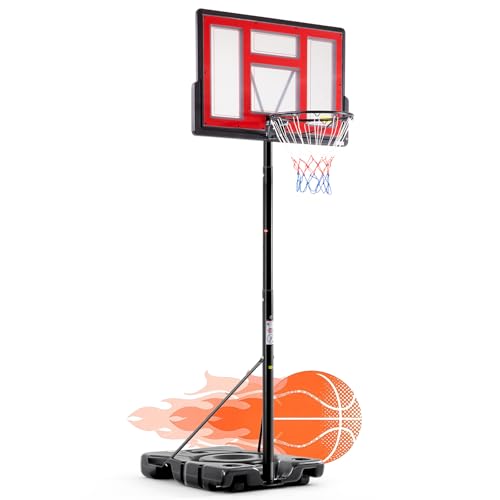
MORE STABLE & DURABLE: The 10ft Basketball Stand comes with a sturdy stand and a upgraded base to which more water or sand can be added to ensure stability and durability. It also comes with wheels for easy transport and setup
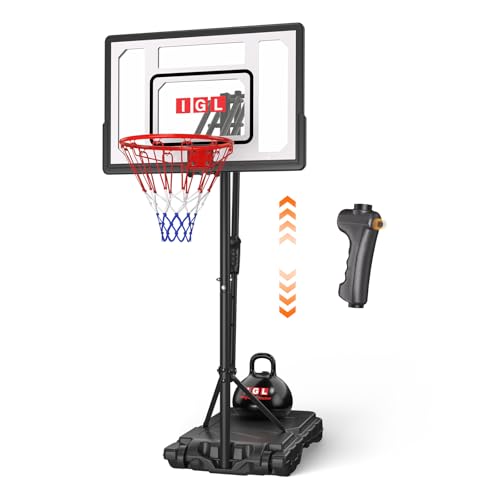
GROWS WITH YOUR CHILD: The basketball hoop can be easily adjusted from 4 to 8.5 feet, to accommodate kids, teenagers, and youth, ensuring years of fun as your children grow and their skills develop

【40x24 IN Shatterproof Backboard】: The 40x24-inch acrylic backboard gives young players a bigger target to build confidence while providing a regulation feel for teens and adults. Shatterproof design withstands daily impact without cracking
Hoop Height for Ages 8-11: Developing Children
The selection of appropriate hoop height for children aged 8 to 11 years is critical for fostering skill development and confidence on the basketball court. At ages 8 to 10, an 8-foot hoop is recommended, which facilitates improved shooting technique and confidence without overexertion. As children progress to ages 9 to 11, gradually raising the hoop height to 9 feet supports skill progression by accommodating their growing strength, while still emphasizing proper shooting mechanics. Lower hoop heights, ideally below the regulation 10 feet, alleviate physical strain and promote muscle memory for key skills, such as layups and basic game tactics. The height adjustment allows for varying developmental stages, enhancing the overall experience and ambition of young players as they refine their skills.
Preparing for Competitive Play Formats
Preparing for competitive basketball play formats necessitates a systematic approach to hoop height adjustments that cater to the developmental needs of adolescent players. As athletes evolve to ages 15 through 18, it becomes essential to adapt training techniques that promote proficiency at the regulation height of 10 feet. This height fosters the growth of competitive strategies important for high school and collegiate play, thereby ensuring uniformity and fairness across various competitive environments.
To facilitate this progression smoothly, portable hoops must allow gradual adjustments from heights of 9 to 9.5 feet. Regular practice at regulation height is imperative, as it encourages the development of proper shooting techniques while simultaneously preparing players for the rigors of formal competition, ultimately enhancing their confidence and performance.
Hoop Height for Ages 12-14: Preteens and Early Teens
A carefully calibrated hoop height is essential for preteens and early teens, as it fosters the foundational skills necessary for successful basketball development. The recommended starting point typically resides around 8 feet, allowing players to master shooting techniques without developing poor habits such as “throwing” the ball. These youths benefit from height progression that is strategically implemented, with increments of 6 inches facilitating gradual adjustment to higher levels.
- Ideal height range for ages 12-14 spans from 7 to 9 feet.
- Proper hoop height assists in skill assessment, enhancing technique and boosting confidence.
- Advancing to regulation height occurs as players demonstrate increased coordination and strength, ensuring effective skill retention and development.
Transitioning to Higher Hoop Heights
As young athletes progress through their basketball development, the shift to higher hoop heights becomes an important consideration that aligns with their increasing physical abilities and skill sets. Gradually adjusting hoop heights, from 6 feet to 10 feet, supports skill assessment, enabling players to build confidence while mastering fundamental techniques. For instance, starting with lower hoops fosters shooting form, while moving to heights of 9 feet for ages 9-11 enhances shooting accuracy. This incremental strategy reduces the likelihood of developing poor habits by allowing focus on technique rather than solely relying on physical strength. Additionally, adjustable hoops provide a practical solution for maintaining consistent play as players grow, ensuring that each shift is age-appropriate, thereby promoting sustained engagement and skill progression.
Regulation Heights for Ages 17 and Up: Adults and Advanced Players
Established standards in basketball dictate that the regulation rim height for individuals aged 17 and above, including adults and advanced players, is consistently set at 10 feet (120 inches) from the court surface to the upper edge of the rim. This universally applied height across professional leagues, such as the NBA and NCAA, guarantees competitive consistency, promoting a fair gameplay environment. The regulation benefits of practicing at this height include improved shooting technique, reduced injury risks, and seamless skill transferability across various levels of competition. Furthermore, utilizing proper standards in practice environments allows players to adapt effectively to game conditions, thereby improving performance and overall game readiness, essential for both recreational participation and serious competition in adult leagues.
Recommended Products
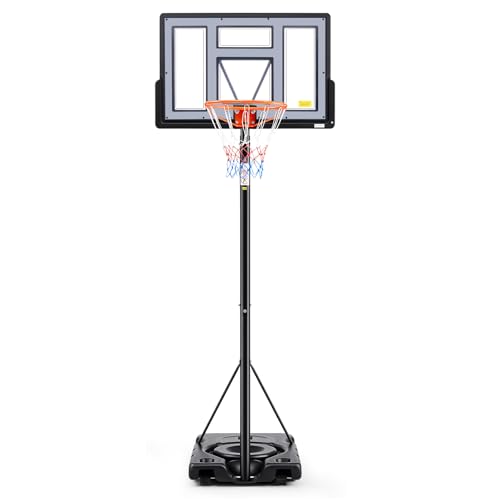
Adjustable Height for All Ages: The Sweetcrispy Basketball Portable Hoop features an adjustable height from 6.1ft to 10ft, making it perfect for all ages and skill levels. Whether you have a tiny toddler or a towering teenager, this versatile hoop can be adjusted to suit their needs, allowing them to develop their basketball skills over time

【CHOSEN BY 41,034+ FAMILIES, BUILT ON 20+ YEARS OF CRAFTSMANSHIP】: The Seray Flagship Edition Basketball Hoop is built on 20+ years of trusted expertise in crafting premium basketball hoops. Engineered for both indoor and outdoor use, it promotes active play while enhancing coordination and motor skills. Designed for Excellence Since 2005.

Ideal Basketball Hoops: The DUMOS Basketball Hoop is perfect for both indoor and outdoor use . It ' s a portable and adjustable system that can be utilized by different ages , with height adjustment from 6.1 feet to 10 feet , making it perfect for family fun
Frequently Asked Questions
How Do I Determine the Best Hoop Size for My Child’s Age?
To determine the best hoop size for a child, consider height recommendations based on age guidelines. Adjustments allow for skill development and guarantee enjoyment, fostering a sense of belonging in the basketball community as they progress.
What Age Should My Child Switch to a Higher Hoop Setting?
At age eight, children should consider hoop progression considerations, adjusting heights according to guidelines. Progression to 8 feet fosters skill development, while gradual changes support growth and confidence in budding basketball enthusiasts, fostering community through the sport.
Can I Use a Non-Adjustable Hoop for Different Age Groups?
Non-adjustable hoops can present height limitations for various age groups, particularly disadvantaging younger players. While suitable for older teens, they may hinder skill development and enjoyment for younger children who need lower heights for effective practice.
How Important Is Hoop Stability for Young Players?
Hoop stability plays a vital role in young players’ safety and development. Adequate hoop weight and safety features minimize accidents, allowing children to focus on skills while boosting their confidence in a supportive, engaging environment.
What Type of Basketball Is Best for Toddlers and Preschoolers?
For toddlers and preschoolers, size 3 basketballs are recommended, balancing safety concerns with manageable weight. These balls foster engagement and skill development, allowing young players to enjoy the game while building confidence in their abilities.


