As an Amazon Associate, we earn from qualifying purchases. Some links on this site are affiliate links at no extra cost to you. Our recommendations are based on thorough research and editorial judgment.


Which Base Filling Material Works Best For Portable Hoops Stability?

For ideal stability in portable basketball hoops, sand is often regarded as the most effective base filling material. Its higher density enhances stability and reduces movement in windy conditions, while its resistance to temperature variations minimizes risks associated with freezing. Water, though easy to fill and drain, offers less weight stability and may require additional anchoring. Base gels provide a middle ground, combining ease of use with stability. Understanding these factors is essential for making an informed choice regarding suitable fillers.
Key Takeaways
- Sand offers a higher weight and stability, making it less susceptible to tipping in windy conditions compared to lighter materials.
- BaseGel provides excellent stability without leakage, ensuring a solid structure while minimizing maintenance needs and mess during installation.
- Water is easy to fill and drain but lacks stability and may require additional anchoring, especially in outdoor environments.
- Concrete provides the most stable and durable solution but is not portable, making it ideal for permanent installations rather than portable hoops.
- Regular inspections and high-quality materials are crucial for maintaining stability and safety in portable hoop setups, regardless of the filling material.
Overview of Base Filling Materials
You may be interested


When selecting a base filling material for portable hoops, it is crucial to evaluate both the specific requirements of the hoop design and the desired balance between stability and portability. The two primary filler types commonly utilized include sand and BaseGel, each presenting unique stability factors.
- Sand: Heavier per volume, enhancing stability but challenging for filling and draining, potentially damaging the base over time. Furthermore, some hoops are simply incompatible with sand.
- BaseGel: Offers maximum stability once hardened, but its permanence effectively limits portability and relocation, given its cost and cleanup requirements. Additionally, selecting a filling material that ensures durability and safety is essential for long-term use.
A thorough understanding of these filling options guarantees users can select a material that best fits their needs while maintaining both safety and functionality in their portable hoops.
Recommended Products

ULTIMATE STABILITY: Replaces up to 400 lbs of sand, just add water to create a firm gel that resists tipping and blowing over; Replicates the stability and function of sand & water, but is mess-free, and doesn't slosh like water for enhanced stability

MAXIMUM STABILITY: Stabilize basketball hoops, plastic sign bases, umbrella stands, volleyball nets, boxing equipment and more using the H2OLD Base Gel. This super absorbent polymer replaces sand or water used as a ballast weight. Combined with water, this powdered substance quickly turns into gel. The resulting firm and stable gel is freeze-thaw durable, making it perfect for use in any climate.

【Universal Design】The basketball hoop sandbag measures 39.57x24.61x4.72in, fitting most portable basketball hoop bases perfectly to keep your hoop clean and tidy. (Note: The product does not include a basketball hoop, plastic base, or sand.)
Water as a Base Filler

Water presents a viable alternative as a base filling material for portable basketball hoops, offering distinct advantages over traditional fillers such as sand or BaseGel. Its ease of use facilitates quick filling and draining, promoting mobility, as water is lighter and simpler to manage than sand. However, the water level must be regularly monitored due to evaporation, necessitating maintenance to prevent instability. In colder climates, users should consider antifreeze additives to mitigate freezing risks; without them, draining the water is advisable to avoid damage. Although water provides less weight stability compared to sand, additional anchoring methods can enhance security, striking a balance between portability and safety features essential for a reliable hoop setup. Moreover, stability during play is significantly influenced by the choice of base filling material, making it critical for optimal performance.
Recommended Products
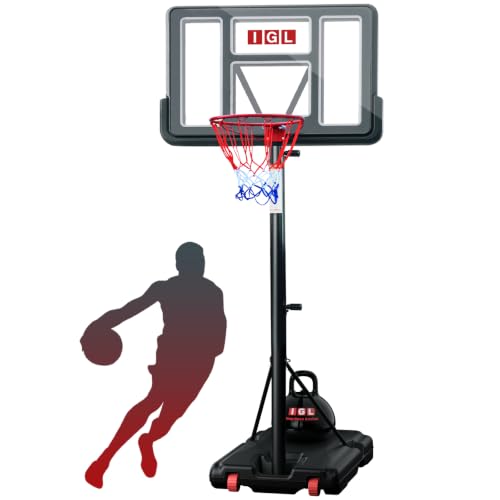
【Adjustable Height: 5.6-10 Feet】: The IGL adjustable basketball goal can be easily adjusted to 5 height levels. Use four rods for 8.0-10 feet and three rods for 5.6-7.6 feet (One more pole will make it more stable)
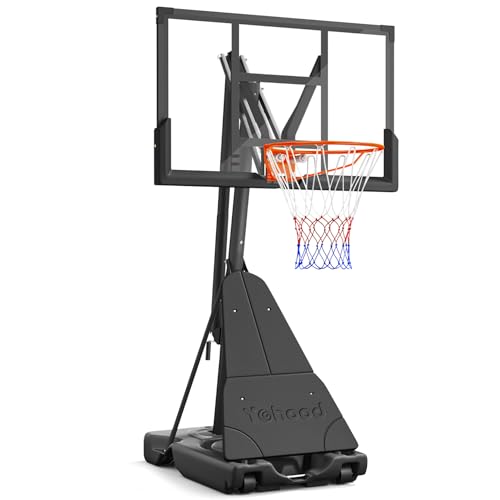
【Quick and Easy Adjustment】 Yohood basketball hoop offers a wide height range from 5.25ft to 10ft, catering to different age groups, which is good entertainments for kids, teenagers and adults. Simply rotate the handle on the back to choose the desired height, time-saving and effortless.

High Quality Toddler Basketball Hoop with More Stable Base: our kids basketball hoop are made of non-toxic and odorless high quality ABS plastic, which is lightweight, easy to carry, and durable. The base can be filled with water (about 6kg) or sand to ensure stability. The upgraded tripod structure allows the toddler basketball stand maintain stability more effectively and will not tip over, making it safe and fun.
The Advantages of Using Sand

The utilization of sand as a base filling material for portable basketball hoops offers several key advantages that contribute to overall stability and safety during gameplay. Sand filling results in a notably higher base weight compared to water, providing a denser and more stable foundation that is less susceptible to tipping or movement, especially under windy conditions.
Moreover, sand does not leak when cracks occur, unlike water, thereby enhancing long-term durability and reducing maintenance efforts related to evaporation. Additionally, its resistance to temperature changes avoids potential damage from freezing. Although sand may complicate transport due to its weight, the benefits of increased safety and stability during vigorous play often outweigh these challenges, making it a preferred choice for those prioritizing a secure setup. Furthermore, choosing the right non-marking basketball shoes can also enhance stability and prevent injuries while playing.
Recommended Products

Universal Design: With dimensions of 39.38" x 25.99" x 5.12", this basketball hoop sandbag is designed to perfectly fit most portable basketball hoop bases, keeping your setup neat and tidy. (Note: The basketball hoop, plastic base, and sand are not included.)

[ADJUSTABLE HEIGHT 4.82FT-8.53FT]: With raised maximum height 8.53ft, the kids basketball hoop outdoor is truly fit for growing kids. It has 12 levels of height adjustment, 4.82ft to 6.46ft with three poles installed, 6.88ft to 8.53ft with four poles installed.

100+ LBS CAPACITY - Specifically designed to hold 50 lb bags of sand sold at big box hardware stores. You can just set the full sand bags inside the Athlima basketball goal bag or fill it with loose sand, rocks, bricks, cinderblocks, weights, or whatever heavy objects you have lying around. **Always follow the manufacturer's recommendations on how much weight to add**
Exploring Base Gels for Stability

Base gels represent a significant advancement in the domain of filling materials used for portable basketball hoop bases, particularly due to their unique composition and resulting properties. The gel composition utilizes absorbent polymers mixed with water to create a solid, jelly-like substance that is mold-resistant and freeze-thaw durable. This provides stability in various weather conditions, enhancing overall hoop performance. Furthermore, these gels can withstand heavy-duty basketball nets which improve the stability of the hoop during play.
Installation considerations involve mixing the gel with a specific volume of water, allowing for efficient filling through designated holes. Once solidified, base gels offer a mess-free option, eliminating typical issues associated with water or sand. Their capacity to resist leaks and maintain stable weight distribution further improves hoop balance, making them an ideal choice for ensuring safety and reducing maintenance needs over time.
Recommended Products
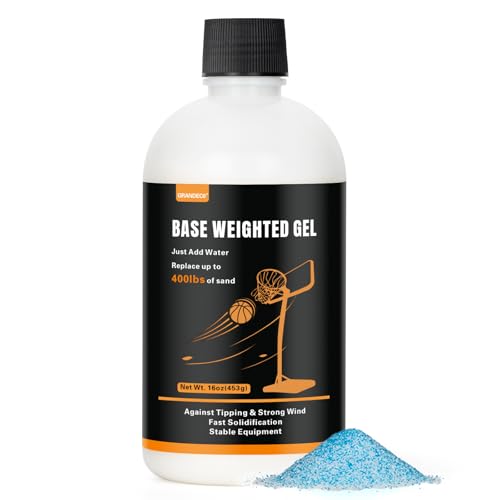
Maximum Stability: Grandeco Base-weighted gel polymer is designed to secure basketball hoops, umbrellas and other outdoor equipment that requires a weighted base, ensuring that they remain stable and secure in all weather conditions, effectively preventing tipping and withstanding strong winds

Unrivaled Stability: LaSyL Base Weighted Gel helps anchor basketball hoops, outdoor umbrellas, sandbags, volleyball nets, and other outdoor equipment for a more stable base in windy and everyday conditions.
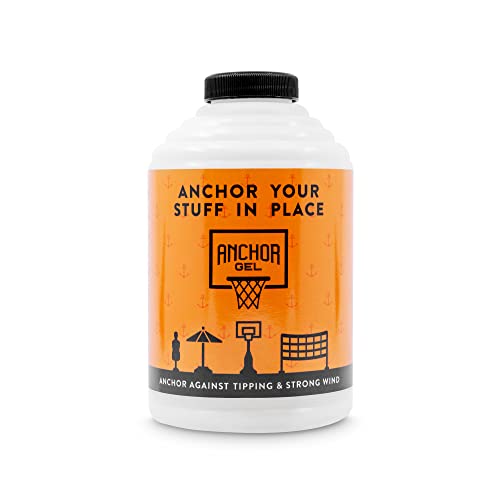
MAXIMIZE STABILITY: Use AnchorGel to protect basketball hoops, volleyball nets, patio furniture, fitness equipment, boxing heavy bags and MMA dummies against tipping and strong winds.
Concrete: Permanent Solutions for Stability

Concrete filling offers a well-established solution for enhancing the stability and performance of portable basketball hoop bases. By pouring mixed cement directly into the base or pole cavity, this approach creates a heavy and solid foundation that markedly reduces wobble and movement during play. When filled to at least two-thirds of the pole height, concrete provides structural reinforcement through its inherent density and permanence, ensuring that the hoop remains stable amid intense activity.
Additionally, incorporating rebar within the concrete enhances its durability and longevity, preventing bending and rusting. This semi-permanent method not only improves player experience by minimizing shake during shots but also acts as a reliable solution for those seeking maximum stability in their basketball hoops, warranting its recommendation for permanent installations. Furthermore, utilizing stability features like triangular designs in conjunction with concrete filling can further enhance overall hoop performance.
Recommended Products

Portable Hoop Anchor Kit: Heavy-duty steel spiral ground anchors and tie down straps provide stability against strong winds. Protects your portable basketball base, family, and property from dangerous tip-overs, safeguarding vehicles, structures, and pedestrians

【UNIVERSAL COMPATIBILITY】Engineered to seamlessly fit most standard in-ground basketball hoop systems with a 7" x 7" bolt pattern anchor base. Ideal for major brands' residential goals. Please double-check your basketball hoop's base dimensions before purchase to ensure a perfect alignment.

MOVE YOUR HOOP - This 7-Inch basketball anchor kit is a direct factory replacement for Silverback, Goaliath and Hoopstar goals
Comparing Weight Considerations
When evaluating the various options for filling materials in portable basketball hoop bases, it is essential to contemplate the intricate balance between weight, stability, and mobility.
Sand-Filled Bases
- Sand provides approximately 280 lbs of weight, considerably enhancing stability through effective weight distribution.
- The granular composition of sand minimizes sloshing, ensuring consistent stability during movements.
Water-Filled Bases
- Although lighter, water bases can weigh between 225-350 lbs when filled, yet they present risks such as punctures leading to instability.
- Mobility is improved, with easy draining facilitating relocation, albeit at the cost of stability.
BaseGel Alternatives
– BaseGel offers a medium weight option, combining moderate stability with enhanced ease of movement, though at a higher cost.
A thorough stability analysis reveals various trade-offs central to each choice. Additionally, proper maintenance of portable hoops, similar to the care needed for premium basketball shoes, can significantly prolong their lifespan.
Durability and Maintenance of Different Fillers
Durability and maintenance requirements for portable basketball hoop base fillers can vary considerably based on the chosen material, often influencing the overall usability and functionality of the hoop.
- Water Filler: While convenient for frequent changes, water may lead to sloshing, decrease stability, and necessitate antifreeze in cold weather. Longevity is compromised as plastic bases risk cracking over time.
- Sand Filler: Sand offers superior rigidity and durability, requiring less frequent maintenance. However, ensuring proper compaction and avoiding contamination is crucial for peak performance.
- Mixed Fillers: Combining sand and water enhances stability but necessitates regular monitoring for evaporation and seepage. Maintenance frequency is higher than sand alone, as both components require attention.
Ultimately, the choice of filler impacts both durability and maintenance demands, affecting player experience.
Mobility Features of Various Filling Materials
The types of materials used for filling portable basketball hoop bases play a significant role in determining their mobility features, thereby affecting the ease with which these hoops can be transported or relocated.
- Water: Offers notable mobility advantages, as it is easy to fill and drain, promoting efficient transport. However, its fluid nature may yield subtle shifts during movement.
- Sand: Provides increased stability due to higher density, yet the added weight diminishes transport efficiency and complicates relocation.
- BaseGel: Balances weight and stability; while it allows manageable movement, the filling and draining process requires effort, classifying it as moderately efficient.
Safety Implications of Base Filling Choices
Given the various materials available for filling portable basketball hoop bases, their impact on safety cannot be overlooked, as improper selection can lead to increased risk of accidents and injuries.
Stability Impact
- Bases that are inadequately filled or constructed from low-quality materials, such as loose weights, can exacerbate tipping hazards, especially during vigorous play or adverse weather.
- Water-filled bases risk leakage, which can unexpectedly compromise stability, leading to potential injuries.
Material Durability and Maintenance
- Sand proves advantageous in cold climates due to its resistance to freeze-thaw damage, unlike water-filled bases that require careful monitoring for leaks.
- Employing high-density polyethylene plastics may enhance durability, but consistent inspection for leaks and cracks remains essential for ensuring filling safety across all base types.
Environmental Impact of Base Filling Materials
As society increasingly prioritizes environmental sustainability, the choice of base filling materials for portable basketball hoops becomes a significant consideration. The use of recycled materials, such as plastics and rubber, mitigates landfill waste while necessitating less energy for production than new raw materials, resulting in diminished carbon emissions. Conversely, natural stone and brick present a low-carbon option, as they require minimal processing and are inherently inert, posing no risk of chemical leachate. While sand involves habitat disruption through mining, water filling poses contamination risks unless managed correctly. Ultimately, balancing these factors is essential for promoting environmental sustainability, as well as ensuring that decisions reflect a commitment to responsible stewardship of natural resources and long-term ecological health.
Frequently Asked Questions
Can I Mix Different Filling Materials in My Portable Hoop’s Base?
Mixing different filling materials in a portable hoop’s base may seem advantageous, but compatibility issues can arise. Users should prioritize filling materials comparison and adhere to manufacturer instructions to guarantee stability and safety for maximum performance.
How Does Each Filling Material Affect Play Quality?
In the dance of basketball performance, water, sand, and alternative materials each weave their tale of ground stability. Heavier mediums enhance security and predictability, while lighter options allow agile movement, shaping the game’s rhythm and player experience.
What Should I Do if My Base Leaks?
If a base leaks, one should prioritize base repair using waterproof tapes and sealants while ensuring leak prevention through regular inspections. Maintaining a stable, dry environment fosters community among enthusiasts committed to enjoying their portable hoops responsibly.
How Often Should I Inspect the Base for Stability?
Regular base maintenance requires inspecting the hoop base before each use and conducting detailed inspections monthly. Increased inspection frequency is advised after severe weather events or if located in high-traffic areas to guarantee ongoing stability.
Are There Any Non-Traditional Filling Materials I Can Use?
Alternative fillers like absorbent polymer gels and mixtures of sand and gel provide unconventional options for stability. These creative solutions, reminiscent of DIY ingenuity, can enhance safety and balance, offering a sense of belonging in innovative choices.


