As an Amazon Associate, we earn from qualifying purchases. Some links on this site are affiliate links at no extra cost to you. Our recommendations are based on thorough research and editorial judgment.


What Permits And Regulations Apply To Home Basketball Court Construction?

Home basketball court construction necessitates adherence to various permits and regulations to guarantee compliance with local building codes, zoning laws, and safety standards. Key considerations include obtaining building permits, which require detailed project plans and inspections. Zoning regulations classify courts as accessory structures, imposing size limitations and setback requirements. Additionally, safety standards mandate sufficient clearances, padded backboards, and accessibility measures. Environmental impact controls may be necessary for locations near sensitive areas. Further information expands upon these critical topics.
Key Takeaways
- Building permits are required to ensure compliance with local regulations and safety standards during home basketball court construction.
- Zoning regulations classify basketball courts as accessory structures and impose size limitations and setbacks based on yard size.
- Site plans and construction drawings must be submitted to local departments for approval, along with any required permit fees.
- Courts must have required clearances, padded surfaces, and comply with ADA standards for accessibility to enhance safety and inclusivity.
- Environmental assessments and additional permits may be needed if constructing near wetlands or conservation areas to address ecological impacts.
Building Permit Requirements
You may be interested


Building a home basketball court typically requires the procurement of a building permit, a formal requirement that guarantees compliance with local regulations and safety standards. The permit acquisition process involves submitting detailed project plans to relevant local departments, along with payment of associated fees, which vary by jurisdiction. Applicants must include a thorough site plan, as well as construction drawings detailing materials, drainage, and other essential components. Additionally, courts must meet structural integrity and safety compliance regulations, incorporating necessary inspections at various construction phases to ascertain adherence to the approved plans. Early consultation with local permit officials can expedite understanding of specific procedural requirements and effectively influence construction timelines, ultimately leading to a smooth construction journey while promoting community safety. Furthermore, it’s essential to consider the stability and support design of the court, ensuring it meets safety compliance regulations during gameplay.
Recommended Products

Enhance Coaching Efficiency: Elevate your coaching game with our basketball clipboard, designed specifically for basketball coaches. Streamline your strategies and communicate effectively during timeouts and training sessions.

COMPLETE COACHING ORGANIZER Designed for basketball coaches to plan practices, develop game strategies, track player progress, and organize season schedules in one convenient notebook.

ALL GREAT PLAYS START WITH A PLAN: Having a comprehensive game strategy is critical for optimal performance and success. This dry erase board for coaches is the perfect visual representation to strategize and demonstrate plays and formations.
Zoning and Land Use Regulations

Zoning and land use regulations play an essential role in the establishment of home basketball courts, as they delineate permissible structures and usage within residential areas. Local zoning classifications considerably influence what types of sports courts can be constructed, with many municipalities designating them as accessory structures and imposing size limitations based on yard size. Compliance with property lines is mandatory, with required setbacks varying according to different zoning districts, thereby ensuring that courts do not encroach on neighboring properties. Homeowners must conduct property surveys and verify zoning adherence to avoid disputes. Additionally, homeowner associations (HOAs) may impose further restrictions, necessitating early consultation to clarify any additional guidelines for court construction and maintenance, enhancing community harmony. Understanding the importance of zoning classifications can help homeowners make informed decisions about their basketball court projects.
Recommended Products

Convenient and Portable: the court line marker includes 10 flat rectangular markers, comes with a convenient storage bag; This feature contributes to stress free transportation and storage, keeping the markers secure and well-managed in various environment

Ample Supply: you will receive 24 rectangular court marker lines, enough to be applied to represent the edge of the service court, baseline, and sideline
Ample Supply: you will receive 12 rectangular court marker lines, enough to be applied to represent the edge of the service court, baseline, and sideline
Site Planning and Construction Considerations

When planning the construction of a home basketball court, careful consideration of site selection and location criteria is paramount, as the chosen area must not only meet regulatory requirements but also guarantee ideal playability and player safety. Essential factors include establishing a flat, level area to secure consistent ball bounce, verifying the absence of trees and overhead utility lines, and adhering to required setbacks from property lines. Additionally, optimal sunlight exposure enhances visibility during play, which is crucial for an enjoyable experience. Court dimensions should be sized appropriately for the available space while including a 3 to 5-foot safety buffer around the perimeter. Engaging with local homeowners’ associations may provide insights into any additional restrictions or approval processes relevant to court location. Furthermore, ensuring stability during play is vital to prevent accidents and enhance the overall experience on your court.
Recommended Products

Clearly state: For ≥98% ball bounce, install only on solid, flat surfaces like concrete, asphalt, or tightly packed soil. On soft/uneven ground, it functions primarily as a drainage/utility mat
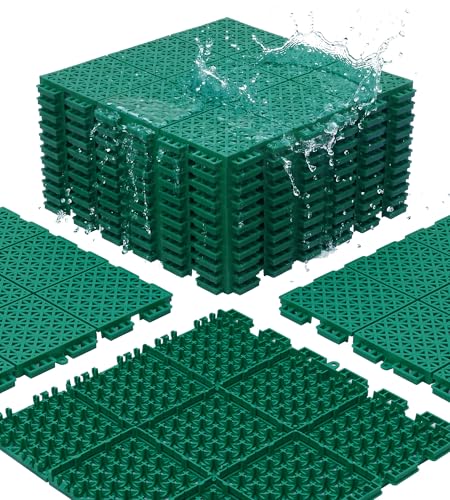
Clearly state: For ≥98% ball bounce, install only on solid, flat surfaces like concrete, asphalt, or tightly packed soil. On soft/uneven ground, it functions primarily as a drainage/utility mat

Clearly state: For ≥98% ball bounce, install only on solid, flat surfaces like concrete, asphalt, or tightly packed soil. On soft/uneven ground, it functions primarily as a drainage/utility mat
Safety and Accessibility Standards

The implementation of safety and accessibility standards for home basketball courts is crucial, ensuring that these installations not only promote enjoyable gameplay but also protect the well-being of all participants.
Safety Features
Mandatory minimum clearance of three feet, with ten feet preferred, is necessary around the court’s perimeter, while padded backboard edges mitigate impact injuries. Equipment safety standards dictate that backboards and rings meet specific dimensions and materials for ideal player protection. Regular maintenance is necessary for ongoing safety compliance.
Accessibility Guidelines
Courts must adhere to ADA requirements, ensuring accessible pathways and entry points, allowing all users to engage. Adequate lighting, alongside clear court markings, enhances visibility and safety, minimizing potential accidents while fostering an inclusive environment for all players. Additionally, incorporating durable materials in the construction of the court can further enhance safety and longevity.
Recommended Products

ATTENTION - NOT COMPATIBLE WITH ALL POLE TYPES, PLEASE MEASURE YOUR POLE BEFORE ORDERING.

LIGHT UP BASKETBALL RIM AT NIGHT: Our LED Strip Light can light up the rim of the basketball hoop. It has 16 unique light patterns, making your basketball hoop more attractive and bright. It boosts basketball lovers' interest in playing basketball and lets them enjoy the fun of playing basketball at night!

【No Electricity Bill 】 — Gefolly SL-5200W solar street light provides 6500K daylight white light. and it's equipped with 320pcs 5054 type super bright LED beads and a 33000mAh battery(life up to 50,000 hours). IP67 waterproof grade makes it work well even in bad weather all year round. Solar-powered, no electricity bill produced, automatically turns on at dusk and turns off during the day, with continuous lighting for up to 36 hours (when fully charged). Note: The remote controls that come with the light are available in white and black. The white and black remote controls are shipped randomly.
Environmental and Municipal Impact Controls

Environmental and municipal impact controls play an essential role in the planning and construction of home basketball courts, particularly as regulations increasingly place emphasis on the long-term sustainability and ecological considerations associated with such projects. Municipalities often require environmental assessments to evaluate the ecological impacts on local ecosystems, soil, and water. For courts located near wetlands or conservation areas, additional permits from state authorities or the EPA may be necessary. Implementing soil erosion control measures, such as silt fences, is critical to prevent runoff during construction. Compliance with local stormwater management regulations guarantees adequate drainage plans that mitigate flooding and water pollution, reflecting a commitment to safeguarding the environment while promoting harmonious community development. Additionally, considering the durability of materials used in construction can enhance the court’s longevity and reduce the need for future repairs.
Recommended Products

LARGE SIZE CAN BE CUT: The total length is 200 feet with a fabric height of 24 inches and a stake height of 36 inches. The size is large enough for a variety of construction sites and can be cut to the right length as needed.

Janitorial & Cleaning Supplies

Constructed of economical silt fabrics and hardwood stakes, spaced every 10', 11 stakes per 100' of
Frequently Asked Questions
How Long Does the Permit Approval Process Typically Take?
The permit processing timeline expectations vary widely, typically ranging from 1 to 8 weeks. Urban areas may experience longer delays due to complexity, while rural locations often enjoy quicker approvals, sometimes under 2 weeks.
Are There Fines for Constructing Without a Permit?
Constructing without a permit can trigger fines rivaling a dragon’s breath, as local authorities impose penalties for violations. Permit exemptions may exist, but unapproved construction’s impacts often outweigh potential savings, inviting costly consequences and legal trouble.
Can I Install a Court if My Neighbor Objects?
Neighbors may object to a basketball court installation; however, if zoning laws are followed, construction can proceed. Engaging in neighborhood agreements and practicing conflict resolution can foster understanding and mitigate opposition.
What Insurance Coverage Do I Need for My Basketball Court?
When constructing a home basketball court, obtaining liability coverage is essential. For instance, if a guest injures themselves, coverage mitigates financial risk. Additionally, ensuring court maintenance protects against further liability claims and promotes player safety.
Are There Financial Incentives for Environmentally-Friendly Court Installations?
Financial incentives for environmentally-friendly court installations often stem from green initiatives promoting court sustainability. These may include tax credits, rebates, and grants, encouraging homeowners to adopt eco-conscious practices while enhancing community engagement and home value.


